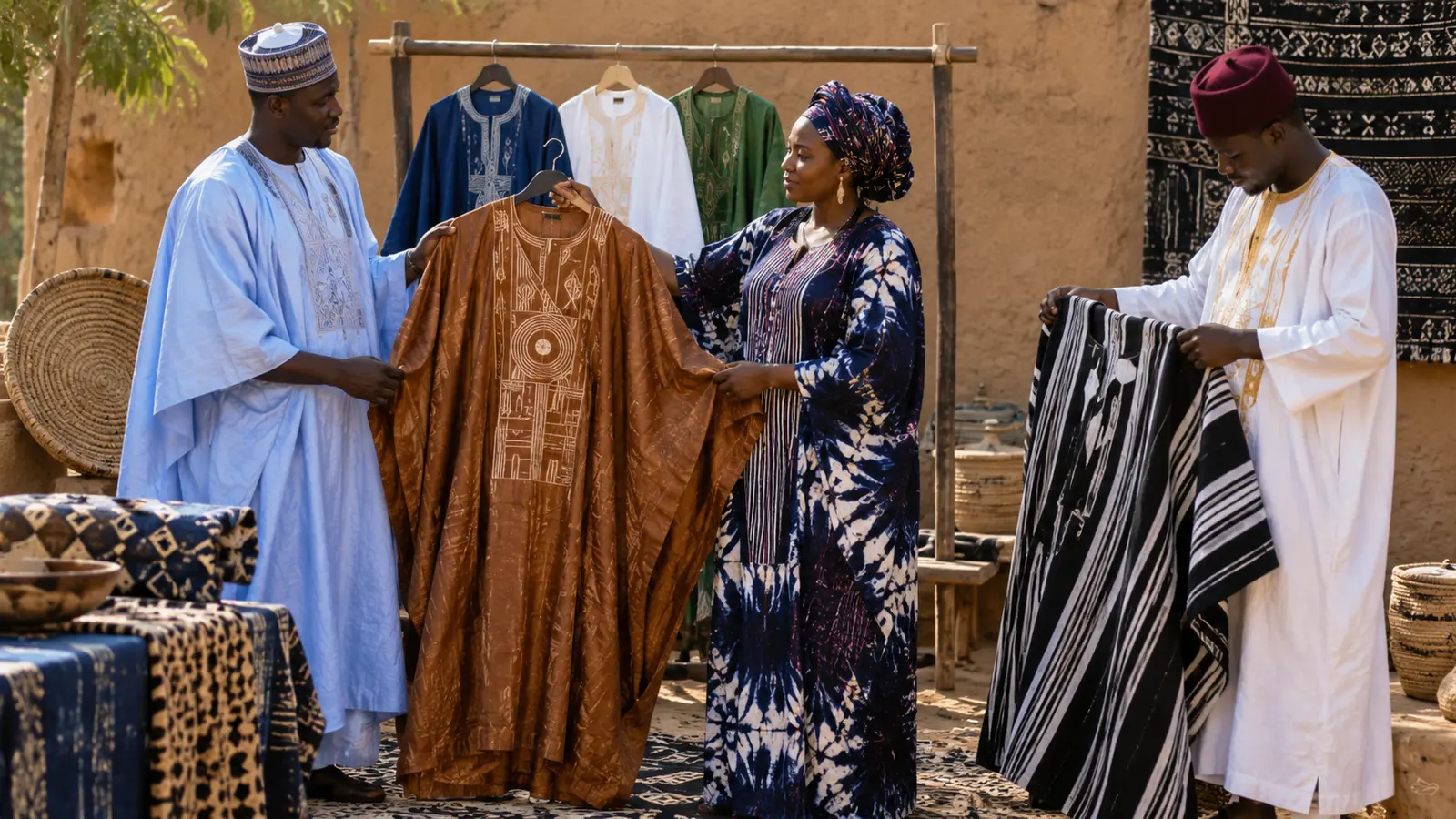
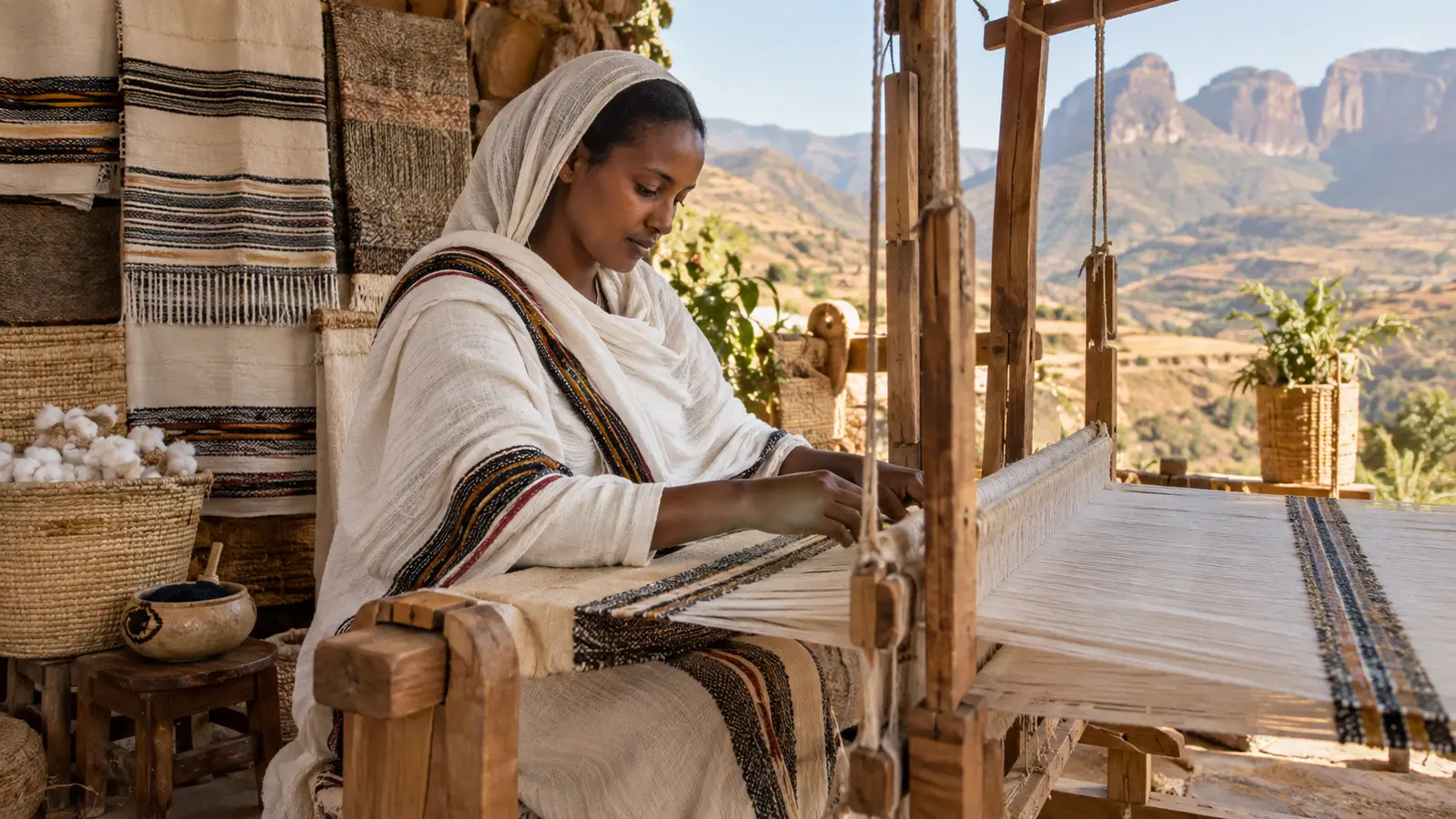
Ethiopian white cotton cloth is produced in weaving communities across the highlands and urban workshops, with Addis Ababa, Dorze areas and northern textile traditions contributing distinct forms. The familiar white surface is often animated by woven tibeb borders in coloured thread.
Cotton is spun, warped and set on a loom; weavers manage tension across long lengths while building patterned borders through repeated thread changes. Sewing then turns the cloth into netela shawls, habesha kemis dresses and other garments whose form and naming vary by community.
The value chain includes growers, spinners—often women working from home—dyers, predominantly male loom weavers in many traditional systems, tailors, traders and designers. Unequal recognition means the final boutique label may be better known than the spinner or weaver.
Power looms and imported fabric supply affordable alternatives, but they have not eliminated demand for handwoven cloth at weddings, religious observances and diaspora celebrations. Survival requires better equipment, design collaboration and prices that count hours of labour rather than treating ‘handmade’ as free cultural atmosphere.