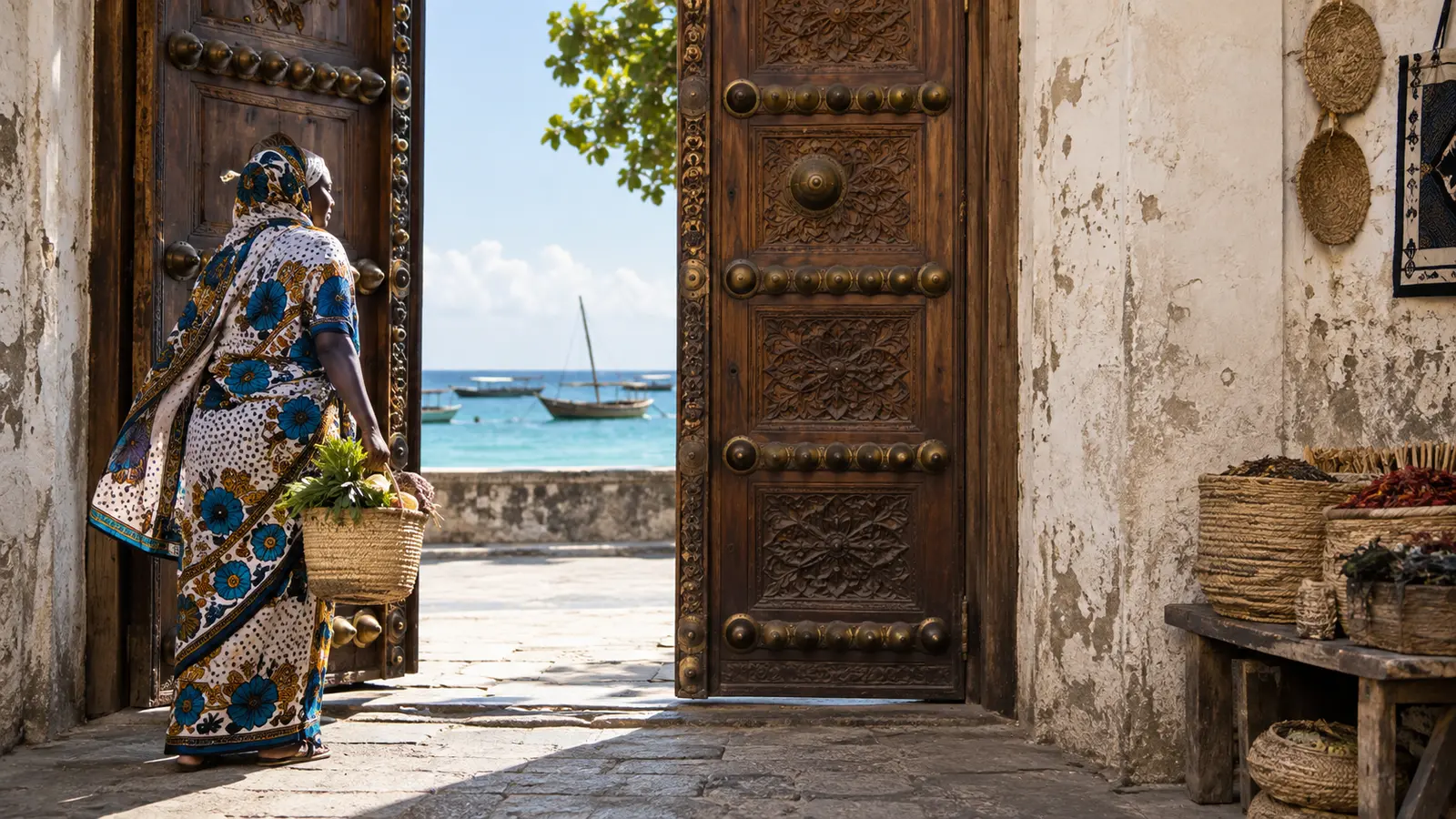
The carved doors of Lamu, Mombasa, Zanzibar and other Swahili towns belong to houses, mosques and commercial streets shaped by centuries of Indian Ocean exchange. Swahili society developed along the East African coast through African foundations and sustained contact with Arabia, Persia, India and later European powers.
A door is the outcome of architecture and joinery. Carpenters select durable timber, set proportions for a stone building, carve posts, lintels and centre panels, and fit heavy leaves to thresholds exposed to salt air. Motifs and construction differ across towns and periods; not every ornate door is ‘Zanzibari,’ nor does every carving carry one fixed meaning.
Historic doors create work for conservators, guides, carpenters and photographers, but tourism can also turn living neighbourhoods into backdrops and push up property costs. Replacing an old door with a hotel entrance may preserve an object while emptying it of its urban context.
Conservation must therefore include residents, traditional materials, drainage, building maintenance and apprenticeships. A doorway survives as heritage when people can still live and work behind it—not only when its surface remains available for visitors’ cameras.