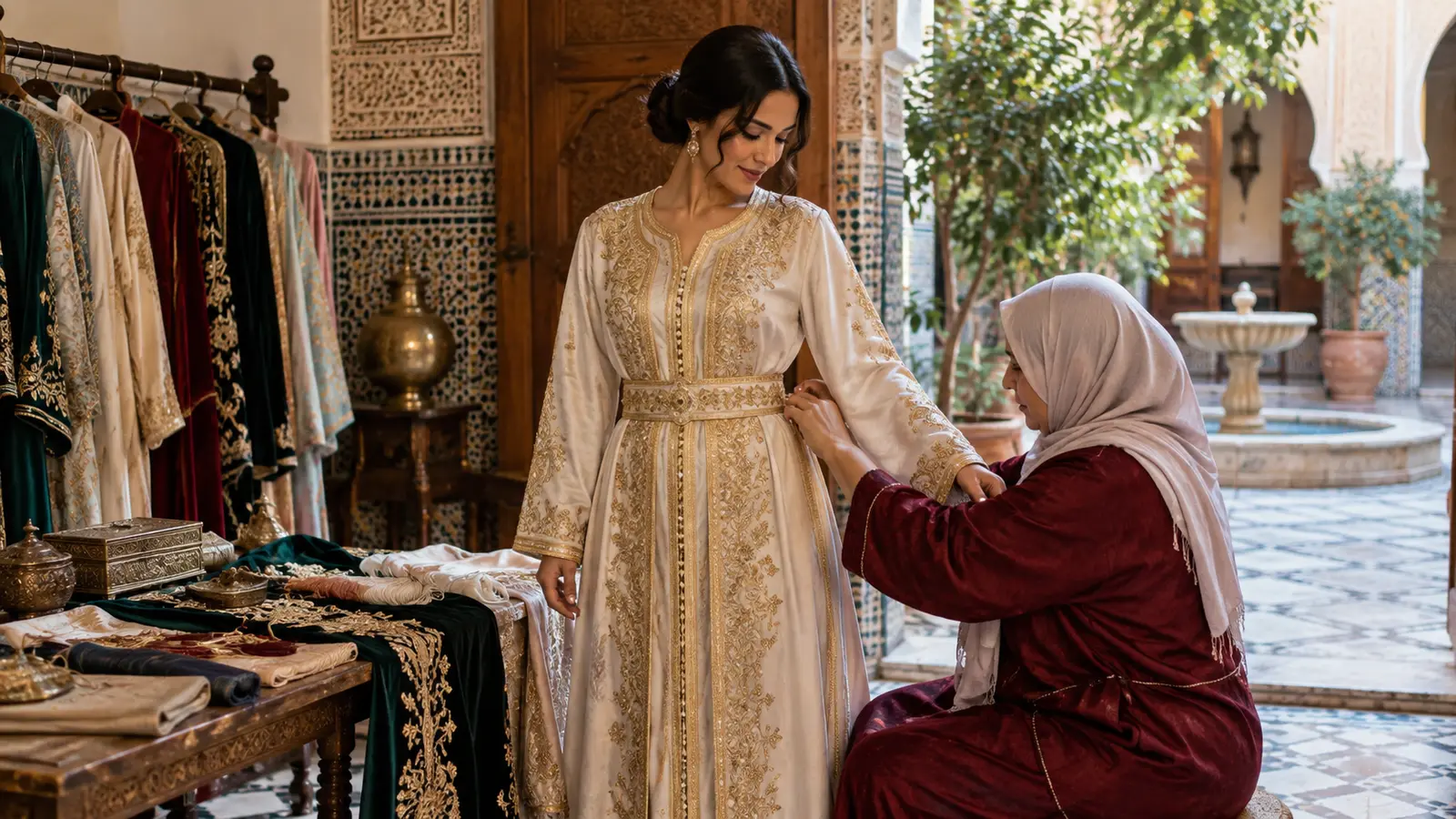
The Moroccan caftan is built in ateliers, not produced by one dramatic sketch. A maalem or master craftsperson coordinates cutting, lining and fitting with specialists in decorative braid, buttons, embroidery and beadwork. Fez, Rabat, Casablanca, Marrakech and Tetouan sustain distinct workshop histories and contemporary markets.
Its silhouette may appear simple, but balance is exacting: the front opening must lie cleanly, sfifa braid must meet precisely, and rows of handworked aqad buttons must hold without distorting silk, velvet, brocade or lighter cloth. Wedding ensembles can add a second layer and belt, multiplying the hours and trades involved.
The caftan supports fabric merchants, home-based embroiderers, button makers, tailors, rental businesses, bridal stylists and fashion houses. Luxury prices do not automatically mean fair wages; transparent workshop credits and realistic production times are better measures of whether prestige reaches the hands creating it.
Runways and diaspora demand have changed colour, cut and styling, while industrial trims imitate labour-intensive details. The garment survives because artisans keep negotiating those changes. Preservation should finance apprenticeships and authorship, not require contemporary Moroccan women to dress as if history stopped.