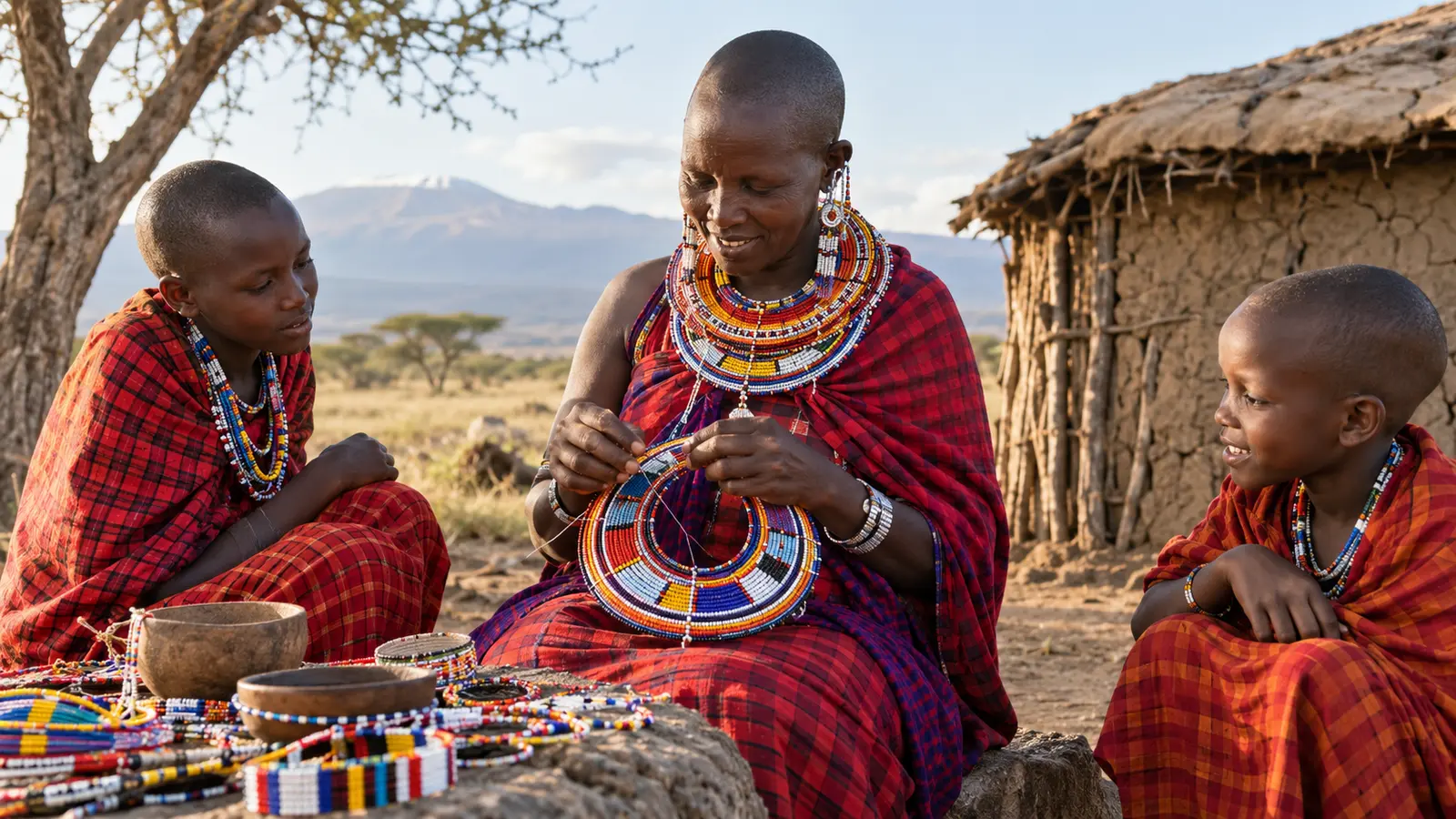
Maasai communities live chiefly in southern Kenya and northern Tanzania, with livelihoods that include pastoralism, trade, wage work, farming and tourism. Beadwork is especially associated with women, who assemble tiny glass beads on wire, thread, leather or hide into collars, earrings, belts and objects connected to dress and ceremony.
Colour and form may communicate age, gender, marriage, affiliation or occasion, but meanings vary by locality and time. A maker chooses a palette, counts repeated units, controls tension and constructs a piece flexible enough to move yet strong enough to survive use. That is mathematical and material skill, not spontaneous decoration.
Sales can provide women with income for food, schooling and health costs, particularly where livestock income is uncertain. Tourism lodges, cooperatives, exporters and online retailers can widen the market, but long chains and copied motifs often separate the highest retail price from the producer.
Phones, synthetic materials and urban fashion have not made beadwork less Maasai. They have opened new design choices and customers. Ethical buying means knowing the workshop or cooperative, avoiding false claims about symbolism, and ensuring that cultural visibility produces decision-making power and income for makers.