Injera is central to food cultures in Ethiopia and Eritrea and is also eaten elsewhere in the Horn. Teff is prized for its flavour and structure, though barley, sorghum, wheat or mixtures may be used according to place, price and availability. Fermentation gives the flatbread its sourness and porous surface.
A cook maintains or develops a starter, mixes batter, waits for fermentation and pours it in a spiral over a broad hot plate. Steam cooks the top without flipping. The tiny holes must be open enough to hold sauces, while the bread remains flexible enough to tear and lift food.
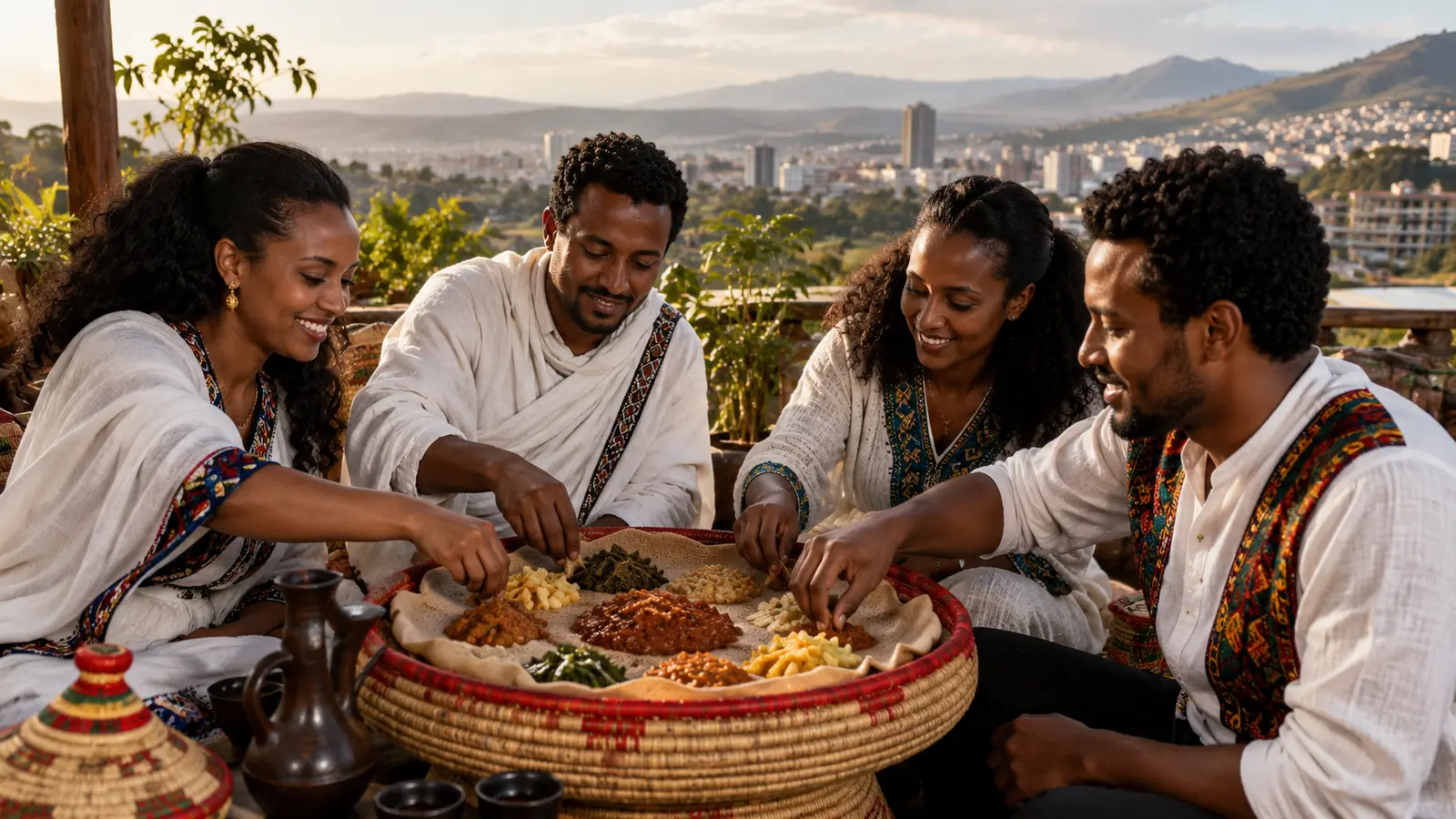
Several stews and vegetables are arranged on one injera-lined tray, making the bread plate, utensil and food. Sharing expresses hospitality, but dining etiquette varies; visitors should follow their hosts rather than perform a generic idea of communal eating.
Urban bakeries and diaspora restaurants have created markets for teff farmers, millers and specialist equipment. Rising grain prices can make an emblematic food harder for ordinary families to afford. Cultural celebration must therefore include crop resilience and fair access, not only restaurant popularity.