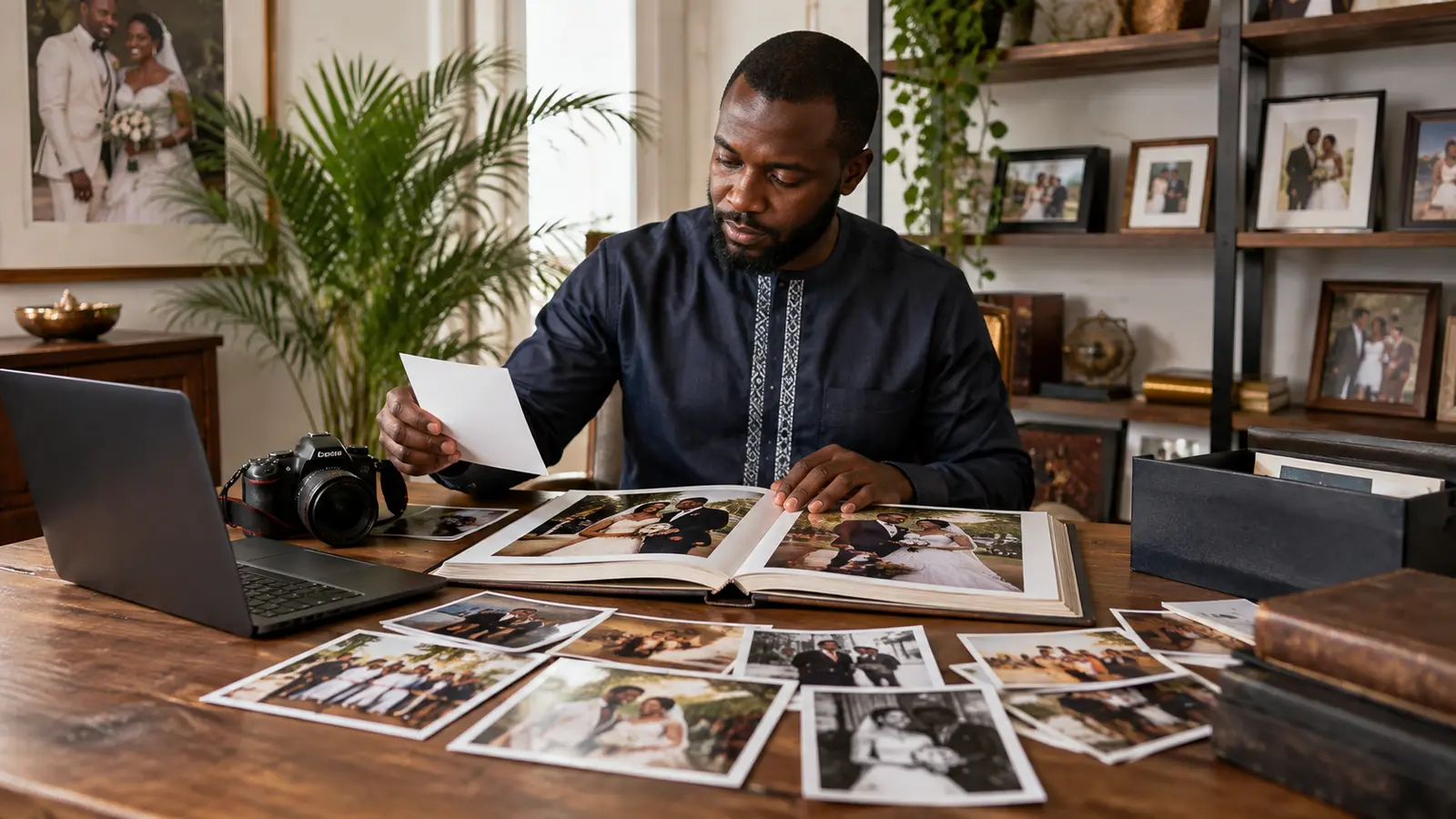
An African wedding photographer may move in one day between prayer, civil procedure, bride-price negotiations, costume changes, dance floors and dozens of relatives with different expectations. The work is local: a Yoruba engagement, Ethiopian Orthodox wedding and Cape Town civil ceremony demand different knowledge and access.
Preparation begins with names, kinship and a running order. Professionals scout light, identify restricted moments, secure permissions, build redundant storage and decide which relatives must be recorded before fatigue changes the room. During the event, they balance formal portraits with gestures that cannot be repeated.
The industry supports photographers, second shooters, editors, album printers, drone operators, stylists and equipment rental. High fees can disguise high costs: cameras, lenses, data backup, travel and weeks of editing sit behind a single visible day.
Phones and instant sharing have changed privacy. Couples need clear contracts covering delivery, archiving and promotional use; guests deserve boundaries around intimate or sacred moments. The strongest wedding archive is not the one with the most staged grandeur, but the one a family can still read truthfully decades later.