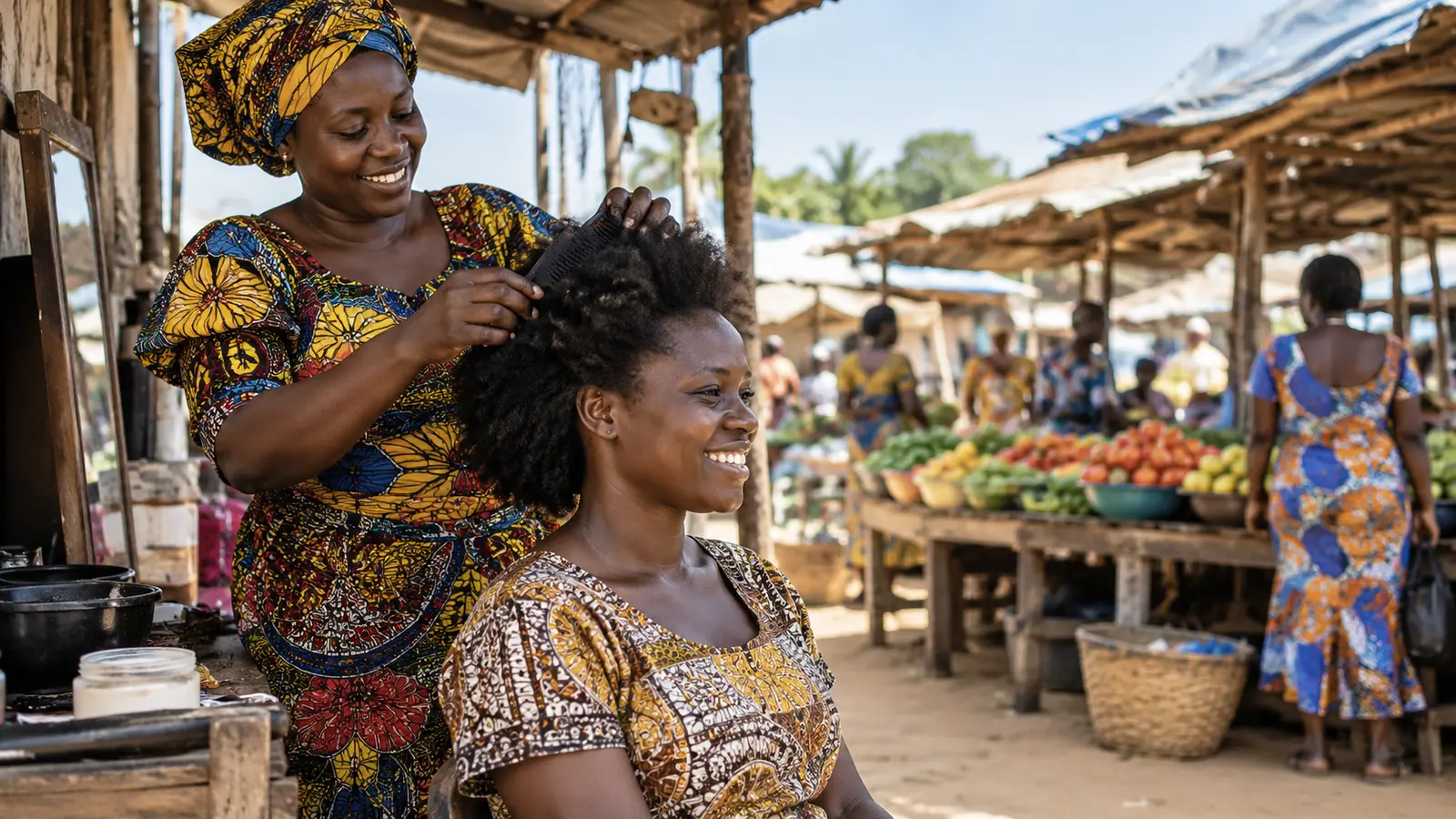
Natural-hair practice is continental and diasporic rather than one style. Braiding, cornrowing, threading, twisting, locking and sculpting have distinct histories in communities from the Sahel to southern Africa. A stylist reads density, curl pattern, scalp condition and the tension a client can safely carry before choosing a technique.
The work combines hygiene, geometry and endurance. Hair is sectioned, moisturised and arranged so repeated parts remain clean; extensions, beads or thread may be added; the finished style must balance appearance with scalp health. Excessive tension and harsh products can damage hair, which makes professional training more than a cosmetic issue.
Salons sustain landlords, stylists, apprentices, product formulators, importers, photographers and online educators. Black consumers have built a large market, yet ownership often shifts away from the communities whose needs created it. Ingredient transparency, product testing and credit for technique are economic questions.
School and workplace rules have historically treated African hair as disorderly, turning grooming into a civil-rights issue. Greater acceptance and protective legislation mark progress, but the aim is choice—not a new command that every Black person must wear hair in a culturally legible way.