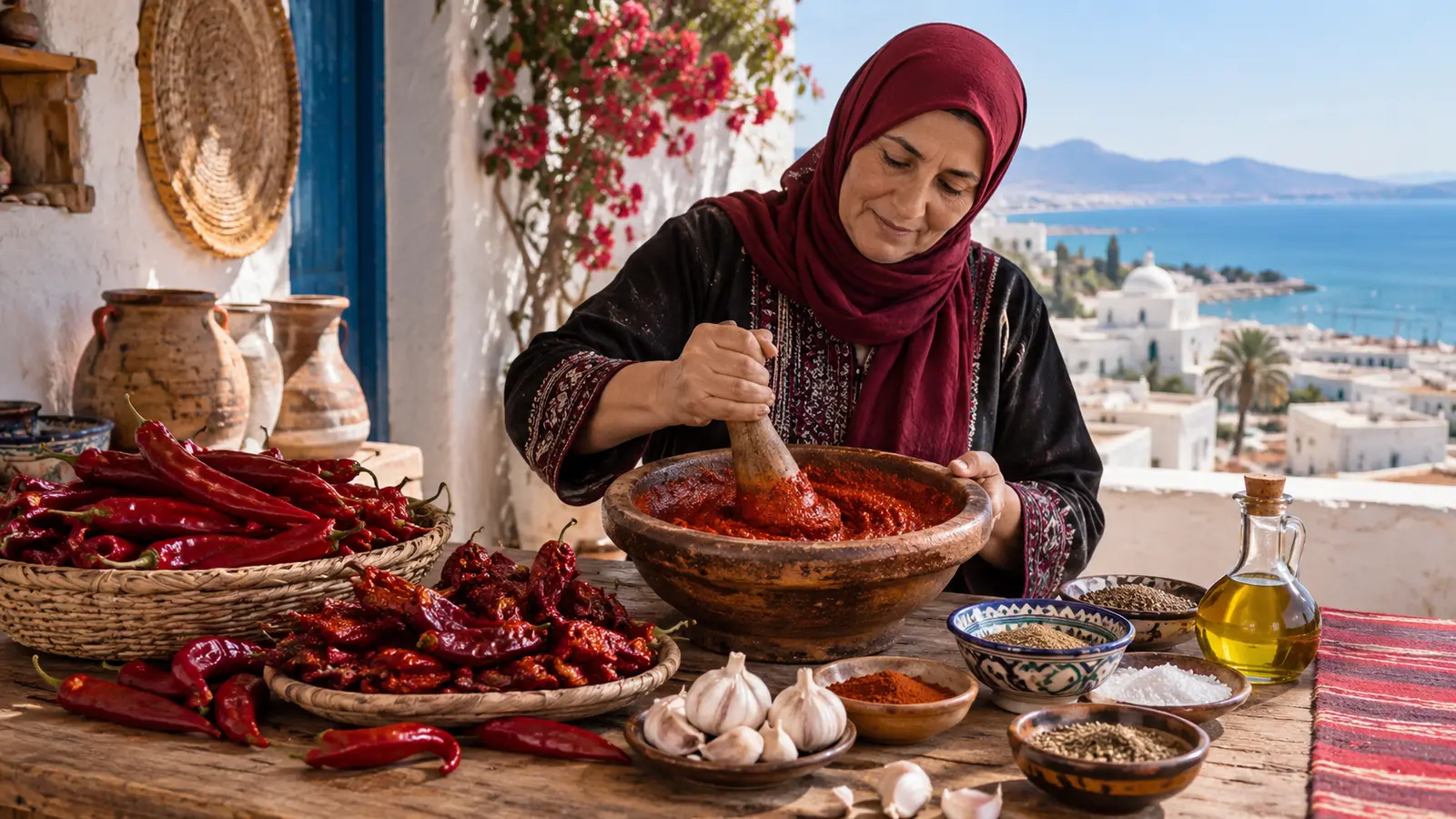
Tunisian harissa begins with red peppers dried under the sun, then cleaned, stemmed and ground with ingredients such as garlic, coriander and caraway. Recipes differ between Cap Bon, the Sahel, inland towns, households and factories; texture and heat reveal both pepper and method.
Preparation follows the agricultural year. Families and processors select ripe peppers, protect them during drying and judge spice proportions before pounding or milling. Olive oil may seal the paste against air. Its use ranges from couscous and soups to sandwiches and table condiments.
Pepper growers, seasonal labourers, spice sellers, millers, jar makers and exporters all share the value chain. UNESCO’s recognition concerns the knowledge and social practice surrounding harissa, not a licence for manufacturers to hide origin behind a national label.
Industrial jars have carried harissa worldwide and provided consistent safety, while small-batch makers retain local varieties and household signatures. Both can coexist if labelling identifies ingredients and place, farmers can earn viable prices and heritage protection does not confine women’s knowledge to unpaid domestic labour.