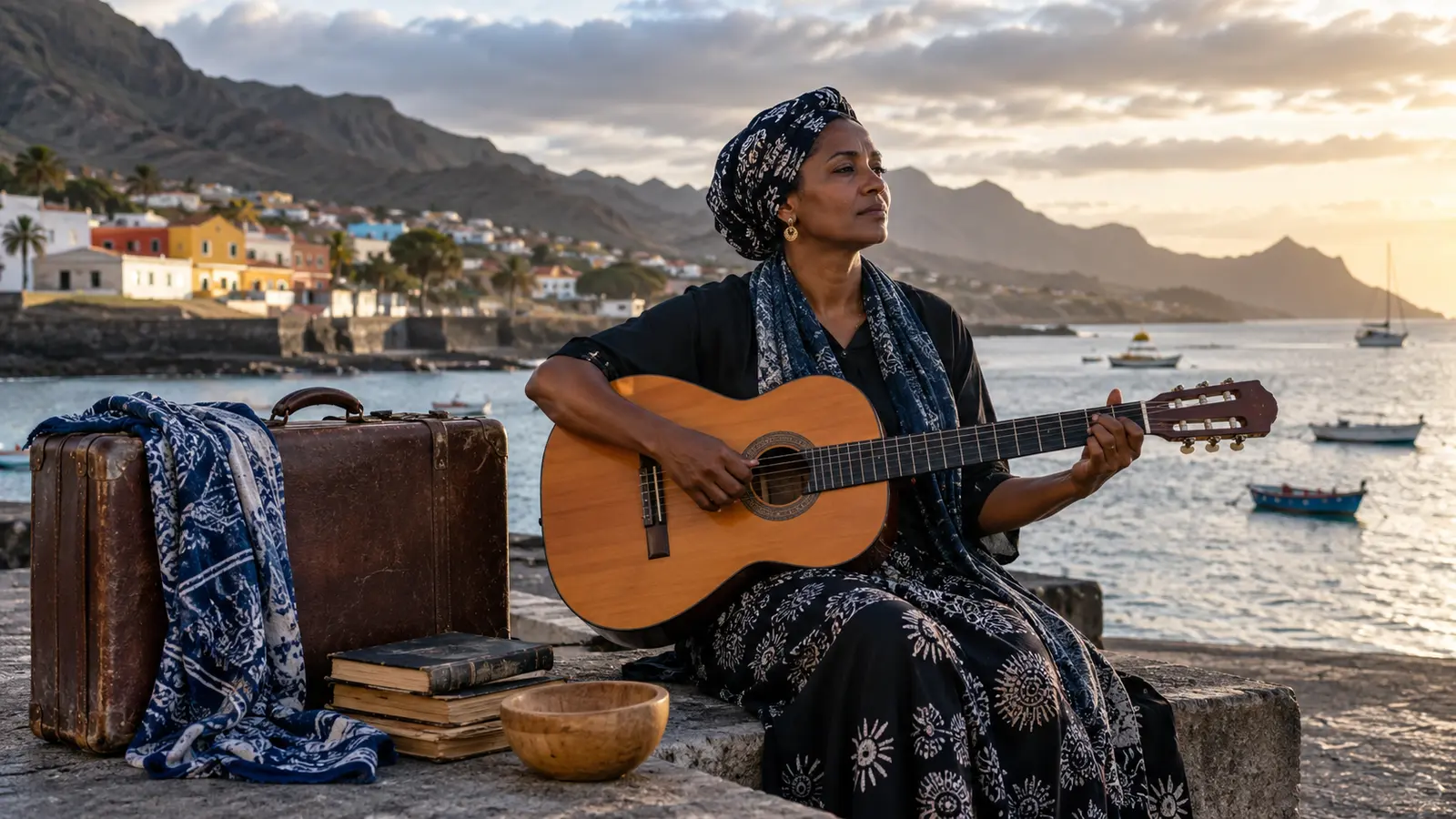
Morna grew in Cabo Verde’s island world and carries Portuguese-language and Cape Verdean Creole poetry through voice and strings. Each island has shaped the repertoire, while Mindelo on São Vicente became an especially visible performance centre. Themes of love, departure and sodade reflect an archipelago marked by migration.
Singers phrase with restraint over instruments such as guitar, cavaquinho and violin, allowing melody and language to carry emotional weight. Composition, accompaniment and interpretation are distinct crafts; the star vocalist is only one worker inside the sound.
Live venues, festivals, teachers, instrument makers, broadcasters and diaspora concerts form the economy around morna. Global fame can expand audiences while concentrating revenue in catalogues and headliners, leaving local musicians to sustain the everyday circuit.
UNESCO inscription in 2019 recognised a living practice. Its future depends on music education, archives, fair royalties and space for young artists to change arrangements without being told that authenticity requires permanent sadness or an unchanged stage costume.