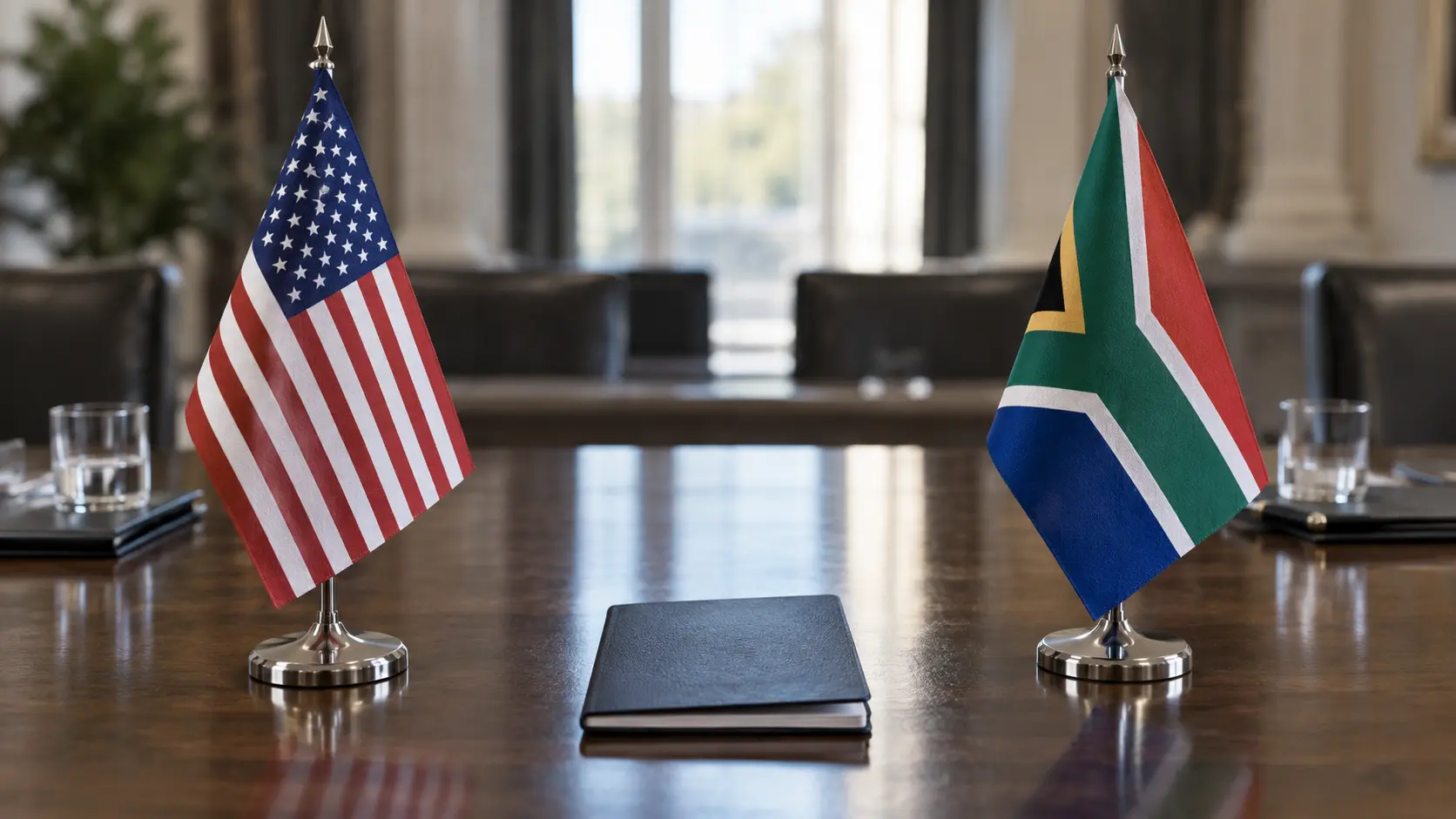
The United States announced a new visa-restriction policy on Tuesday, 15 September 2026, aimed at certain foreign nationals connected to policies or conduct in South Africa. Pretoria answered on Wednesday, 16 September, rejecting Washington's rationale and calling for bilateral disagreements to be handled through state-to-state engagement rather than unilateral measures.
Secretary of State Marco Rubio said the policy was issued under section 212(a)(3)(C) of the U.S. Immigration and Nationality Act. The State Department says it targets foreign nationals it considers responsible for, or complicit in, enacting or implementing laws or policies that enable uncompensated land seizures, race-based discrimination or the incitement of imminent violence against members of minority ethnic or racial groups in South Africa.
Who the policy may cover
That description is Washington's stated basis for the measure, not an independently established finding against any named person. The announcement identified no officials or other individuals, and it did not publish a list of revoked visas or refused applications. It also said certain family members may be covered. The policy therefore should not be described as a blanket ban on South African travellers.
The cited provision allows the U.S. secretary of state to deem a foreign national inadmissible when entry could have potentially serious adverse foreign-policy consequences for the United States. The 15 September statement announces the policy and its criteria, but does not disclose how many people have been assessed, whether any specific visa has already been cancelled, or which offices would be affected by future determinations.
Pretoria rejects Washington's account
South African International Relations Minister Ronald Lamola said the U.S. action rests on what Pretoria regards as a mischaracterisation of domestic policy promoted by fringe groups claiming to speak for minorities and Afrikaners. His ministry argued that legislation adopted since apartheid is intended to repair historic exclusion and that South Africa has a sovereign right to pursue equality through its constitutional institutions.
Pretoria also pointed to the Prevention and Combating of Hate Crimes and Hate Speech Act 16 of 2023 as part of its legal response to hate speech and hate crimes. It said crime affects South Africans across racial groups and denied that the state targets people on the basis of race, colour or social origin. Those are the South African government's positions in the diplomatic dispute; they do not erase Washington's contrary claims.
The confrontation builds on Executive Order 14204, signed by President Donald Trump on 7 February 2025. That order directed U.S. agencies to halt aid to South Africa to the maximum extent allowed by law, subject to exceptions, and to prioritise humanitarian relief for Afrikaners the administration considers victims of discrimination. The new visa policy is a separate measure announced under immigration law, not simply a restatement of the earlier order.
What remains unknown
The practical reach remains uncertain because Washington has not named targets or reported a total number of affected people. Ordinary South African applicants should not assume from the announcement alone that every visa class or every citizen is restricted. Travellers need to rely on their individual consular instructions and official U.S. notices rather than political commentary or social-media lists purporting to identify sanctioned people.
The dispute matters beyond travel. It deepens a broader rupture between two major economies over land reform, racial redress, foreign policy and the meaning of minority protection. Both governments say they are acting within their laws, but their sharply different accounts make further diplomatic escalation possible; any named designations, court challenge, negotiated change or formal implementation guidance would materially change the story.