
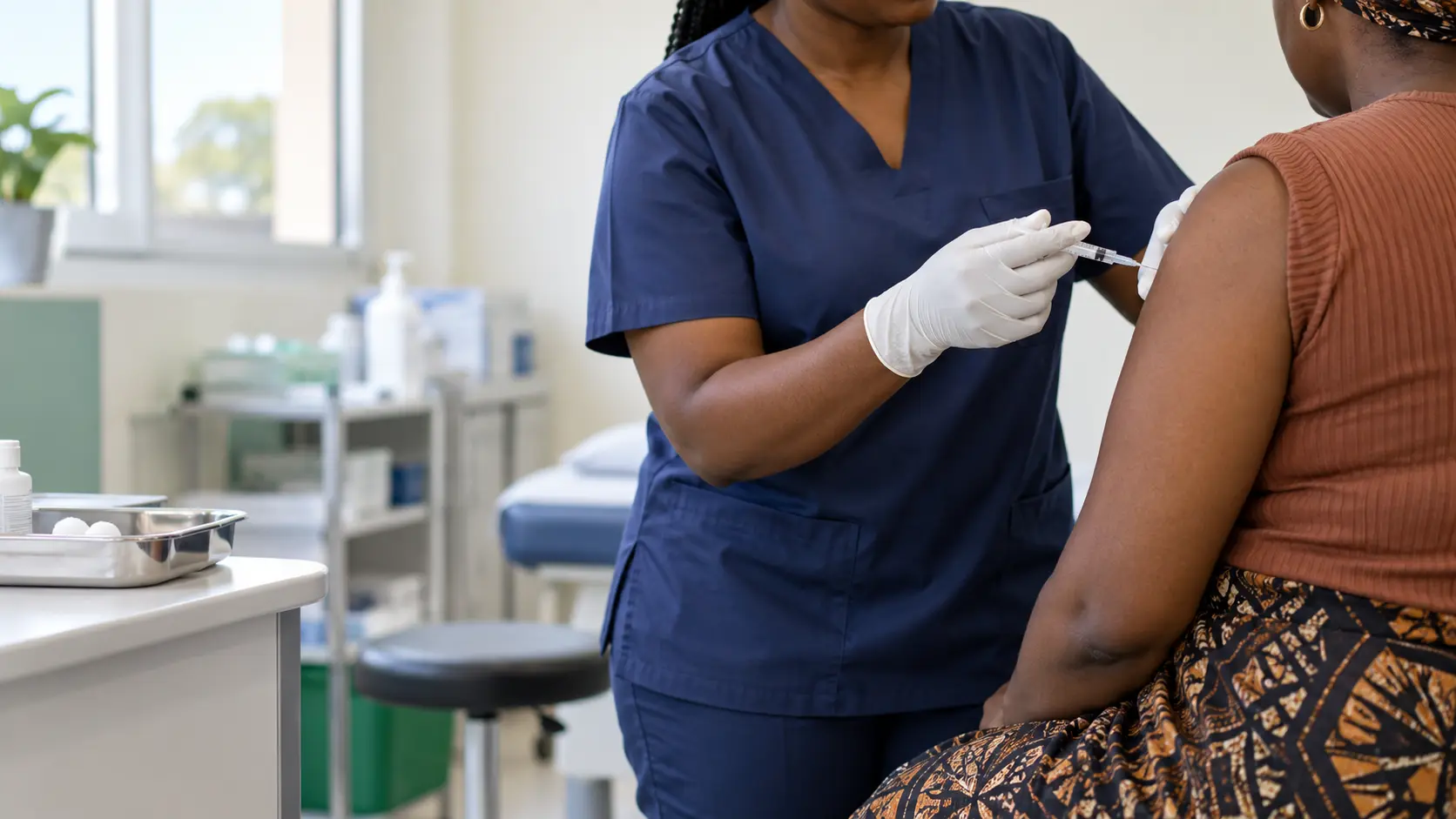
South Africa’s Department of Health says 55,123 people had started lenacapavir for HIV prevention by Monday, 7 September, three months after the national programme was launched. The milestone measures people initiated on the medicine; it does not mean 55,123 people have completed continuing protection or that the country’s HIV epidemic has already changed course.
Lenacapavir is a long-acting form of pre-exposure prophylaxis, commonly called PrEP. It is administered twice a year to help HIV-negative people reduce their risk of acquiring HIV. It is not a vaccine, a cure or a substitute for antiretroviral treatment for someone living with HIV, and the Department says it is being offered alongside other prevention choices.
The rollout currently covers about 360 public health facilities in 24 high-burden districts across six of South Africa’s nine provinces. Gauteng recorded 26,357 initiations, followed by KwaZulu-Natal with 11,941, North West with 4,479, Western Cape with 4,446, Mpumalanga with 4,294 and Eastern Cape with 3,606. Those provincial figures add up to the reported national total.
Women account for 71 percent of recipients, according to the Department, which said most of the female recipients were pregnant or breastfeeding. That distribution reflects the programme’s effort to reach people facing high risk, but it also makes careful counselling, clinical follow-up and transparent safety monitoring especially important.
President Cyril Ramaphosa and Health Minister Aaron Motsoaledi launched the programme on 5 June. At the launch, the government said it aimed to reach close to one million people by the end of 2027 and three million within three years. The new total therefore shows meaningful early demand, while also illustrating how far delivery must expand to reach the stated targets.
World Health Organization guidance recommends lenacapavir as an additional PrEP choice within combination HIV prevention, not as a stand-alone answer. WHO also recommends HIV testing when people begin or continue long-acting injectable PrEP. Regular testing matters because prevention medicines must be used within a system that can identify infection promptly and connect people to the correct treatment.
South Africa’s National Essential Medicines List Committee gave lenacapavir for PrEP a strong recommendation based on moderate-certainty evidence. Its review also highlighted the need to watch for drug resistance if HIV is acquired while lenacapavir remains in the body. That is why reliable appointment systems, repeat testing and support for the next six-month dose are part of the intervention rather than administrative extras.
The Department says healthcare workers and programme partners are monitoring uptake, medicine availability, service quality, follow-up and safety. It has asked anyone who experiences a serious or persistent adverse event after an injection to report it promptly to a healthcare worker. Reporting a suspected event does not by itself prove that lenacapavir caused it; pharmacovigilance is the process used to investigate that question.
Access is the next test. The June launch concentrated supply in selected high-burden districts, and the programme must still show that clinics can maintain stocks, reach people outside major urban centres and provide second injections on time. Expansion should also preserve a genuine choice among condoms, oral PrEP and other proven prevention options rather than making one product the only practical route.
The 55,123 initiations are therefore a significant implementation milestone, not an endpoint. The evidence that matters next will include retention at the second dose, equitable provincial coverage, uninterrupted supply, adverse-event monitoring and whether new HIV infections fall among the communities the programme is intended to serve.