
Mali's military has acknowledged that soldiers were killed and others taken hostage after a September 10 attack on its garrison at Dioura in the central Mopti region. The admission followed the release of videos by al-Qaida-linked Jama'at Nusrat al-Islam wal-Muslimin, or JNIM, which said it captured 93 soldiers and 'neutralised' 150 members of the armed forces. Those JNIM figures have not been independently verified.
The timing of the new material is what makes this a fresh development rather than a report of a new attack. The assault happened on September 10; JNIM published its detailed claim and prisoner footage more than a week later, and the Malian army issued a further operational account on September 19. Readers should therefore separate the event date from the date on which the scale of the alleged losses became public.
What Mali's army has confirmed
In its September 19 account, the Malian Armed Forces said units were continuing targeted strikes against positions around the garrison and the edge of Dioura. It said a large air-and-ground operation, including transport-helicopter rotations, evacuated two companies that had held the position. The army praised those troops and referred to several personnel killed in the line of duty, but it did not publish names or a consolidated casualty figure.
The military also said search-and-rescue operations were continuing for colleagues being held hostage. That is an important official acknowledgement that some personnel are in captivity, even though the government has not confirmed JNIM's claimed total of 93. Army spokesperson Col.-Maj. Bakary Bocar Maïga declined to give the Associated Press a fuller response.
JNIM's statement said 150 Malian personnel, including two colonels and a captain, had been 'neutralised.' That term can cover people killed or otherwise removed from combat and should not be converted into a confirmed death toll. The group is a party to the conflict and uses its media channels for propaganda; its figures require independent corroboration even when accompanying images appear to show prisoners or captured equipment.
The claims that remain unverified
The Associated Press said it could not immediately verify either the casualty number or the prisoner total. Earlier, Mali's army said its own operations had killed several dozen attackers and destroyed motorcycles and pickup trucks. Those battlefield claims also lack an independently established final count. The responsible account is therefore narrower: a major attack occurred, the army confirms losses and hostages, and the precise human toll remains unresolved.
Published material indicates that the garrison suffered a serious operational setback, but it does not establish the current status of every soldier or prove every item in the militants' claimed weapons inventory. Nor does an evacuation by itself show that Dioura is securely back under continuous government control. A clear official update should distinguish the dead, wounded, missing, evacuated and captured rather than combining those categories.
Dioura matters because isolated bases in central Mali help the state contest roads and rural territory where armed groups can move quickly. When a garrison is overrun or emptied, the consequences extend beyond the site: militants may gain weapons, prisoners and propaganda while nearby communities face greater uncertainty over travel, markets and access to services.
Why Dioura matters beyond one garrison
The attack also tests the security strategy of President Assimi Goïta's military-led government and its Russian partners. Mali moved away from French and United Nations security support after successive coups and has relied increasingly on Russian assistance. Continued large attacks do not by themselves prove the failure of every operation, but they intensify scrutiny of whether remote posts can be warned, reinforced and evacuated in time.
JNIM is an al-Qaida-linked coalition active across the Sahel. Violence involving JNIM, Islamic State affiliates, state forces and other armed groups has expanded across Mali and neighbouring Burkina Faso and Niger. Civilians carry much of the cost through deaths, displacement, disrupted trade and reduced access to farms, schools and health care, even when the immediate target is military.
The new claims arrive just before Mali's September 22 Independence Day, increasing political pressure on the authorities to provide a credible account. National commemorations do not change the evidence standard: neither militant video nor a brief military communiqué can substitute for a verified personnel register and notification of affected families.
What families and the public still need
The next meaningful update will be an official named or category-by-category toll, independently authenticated proof of life for captives, confirmed releases or recoveries, and evidence about who controls the garrison and surrounding roads. Until then, headlines that present 150 as a confirmed number killed or 93 as a settled prisoner count go beyond what the available reporting establishes.
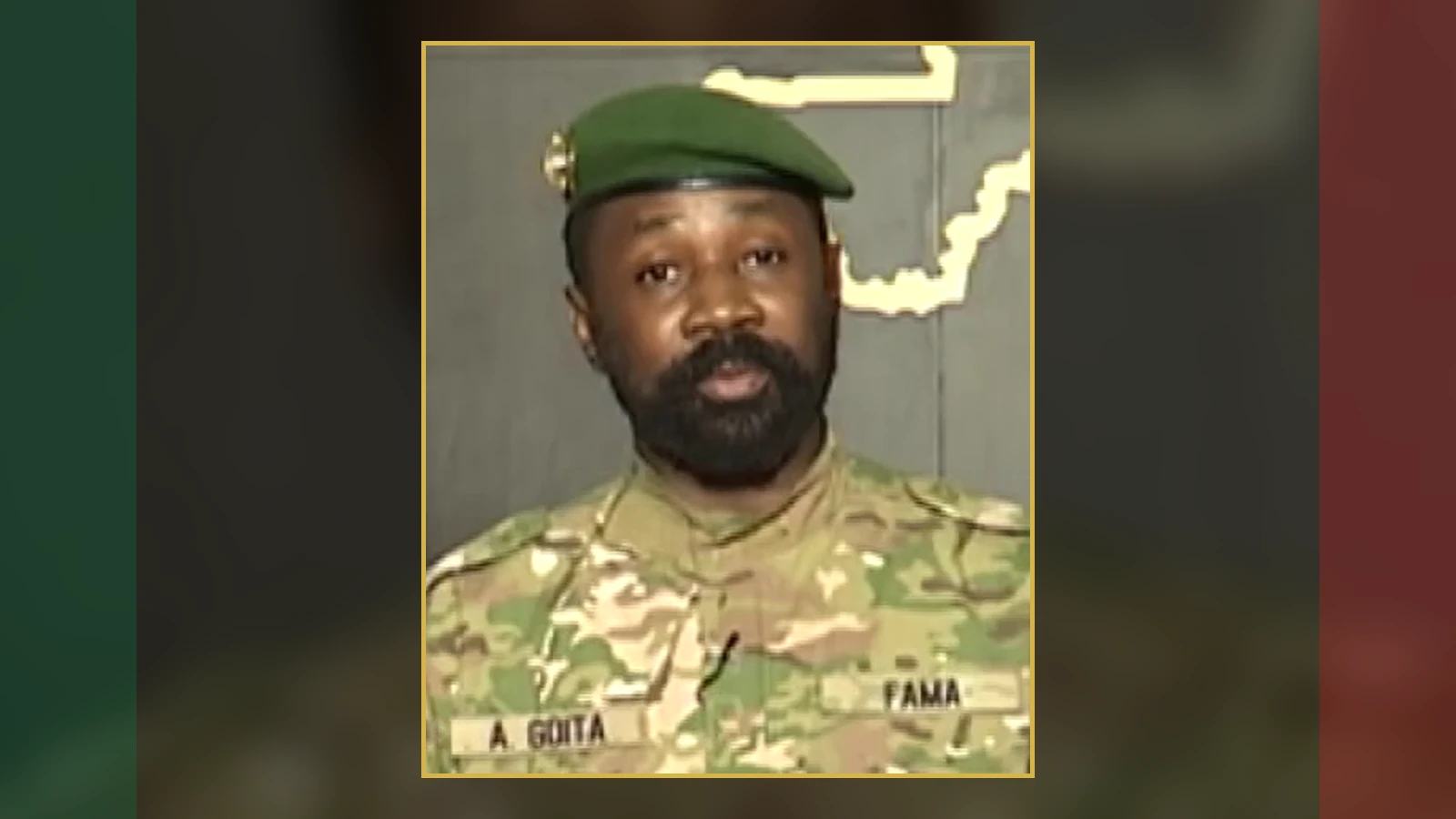
The accompanying photograph is a public-domain archival portrait of Assimi Goïta from August 2021, used to identify the national leader whose government directs the security response. It was not taken during the September 2026 attack and does not show Dioura, the garrison, any casualty or any captured soldier.