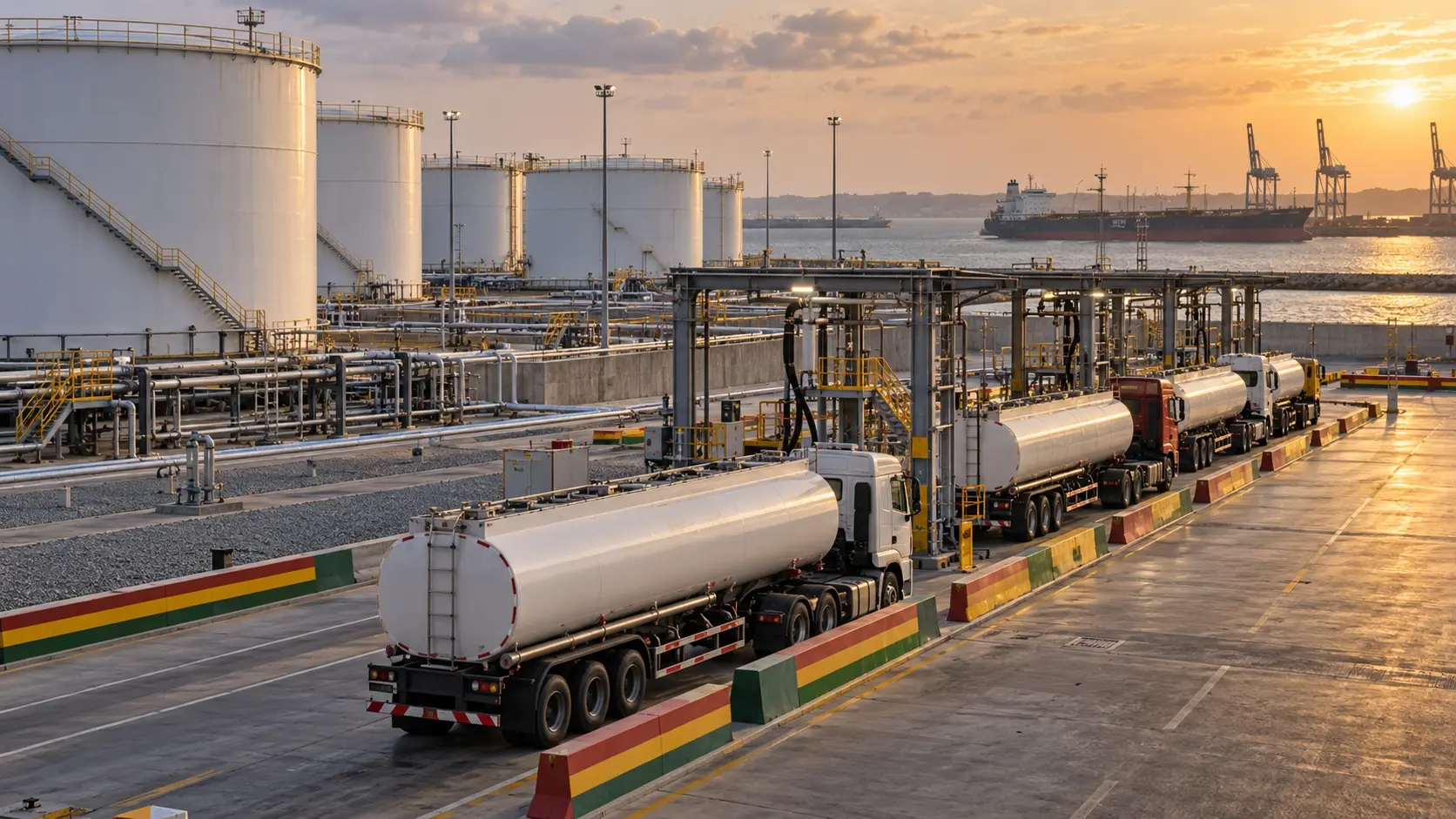
Ghana’s state-owned BOST Energies has reduced diesel and petrol exports to Burkina Faso and Mali since August so that more fuel remains available for Ghana’s domestic market, Managing Director Afetsi Awoonor said. Reuters interviewed Awoonor on Wednesday, 16 September, during an energy conference in Bangkok; the report was published internationally on 16 September and by CNBC Africa on 17 September.
Awoonor said Burkina Faso requested 80,000 metric tonnes for July and August but BOST supplied 40,000 tonnes. Mali received 10,000 tonnes during the same period even though it sought an additional 40,000 tonnes for August and September. Those figures describe requests to and deliveries by BOST; they are not national import totals for either Sahel country.
What BOST says it supplied
The reduction is therefore better described as a supply-prioritisation decision than an export ban. BOST has not said that all commercial fuel movements from Ghana to Burkina Faso or Mali have stopped, and the announcement does not establish that either country has exhausted its stocks. Other suppliers and coastal routes may continue to serve those markets.
Awoonor said rising Ghanaian diesel demand and the high cost of available supply were making it harder to keep the domestic market adequately supplied while limiting price pressure. He put BOST’s share of Ghana’s import-and-distribution market at about 30% and said diesel makes up roughly two-thirds of the company’s supply portfolio.
Official National Petroleum Authority data show the scale of the balancing act. Ghana supplied 1.68 million tonnes of petroleum products to its domestic market in the first quarter of 2026, including about 654,000 tonnes of gasoil and 657,000 tonnes of petrol. The same bulletin records 254,768 tonnes exported or transited to Burkina Faso during that quarter, underlining the importance of Ghana’s storage and transport system to a landlocked neighbour.
Why the decision matters beyond Ghana
Burkina Faso and Mali have no seaports and depend on overland corridors from coastal West African states, including Ghana and Côte d’Ivoire. A smaller allocation from one large distributor can tighten logistics, raise replacement costs or force buyers to seek other routes. It does not, on its own, prove a nationwide fuel shortage or justify claims about pump prices without local market evidence.
The pressure arrives at a difficult time for the Sahel. Both countries are confronting armed insurgencies, long-distance transport risks and the cost of moving fuel from coastal terminals inland. Diesel is particularly important for freight, agriculture, generators and public services, so prolonged constraints would carry wider economic consequences even when retail stations remain supplied.
For Ghana, retaining more stock is a precaution against expensive replacement cargoes and rapid changes in local demand. The latest reviewed BOST statement says supply remains available but costly. Readers should not interpret the export curbs as evidence that Ghana has run out of fuel; the verified development is that one state distributor is allocating less of its volume to two export customers.
A domestic buffer, not proof of a shortage
Awoonor also outlined an expansion plan separate from the immediate curbs: an LPG import terminal in Tema targeted for the fourth quarter of 2027, a storage facility in Kumasi and terminals at six locations in phases. Those projects remain plans, not completed capacity. The next indicators to watch are Ghana’s official stock bulletins, any revised BOST allocations, and confirmed supply or price effects in Burkina Faso and Mali.