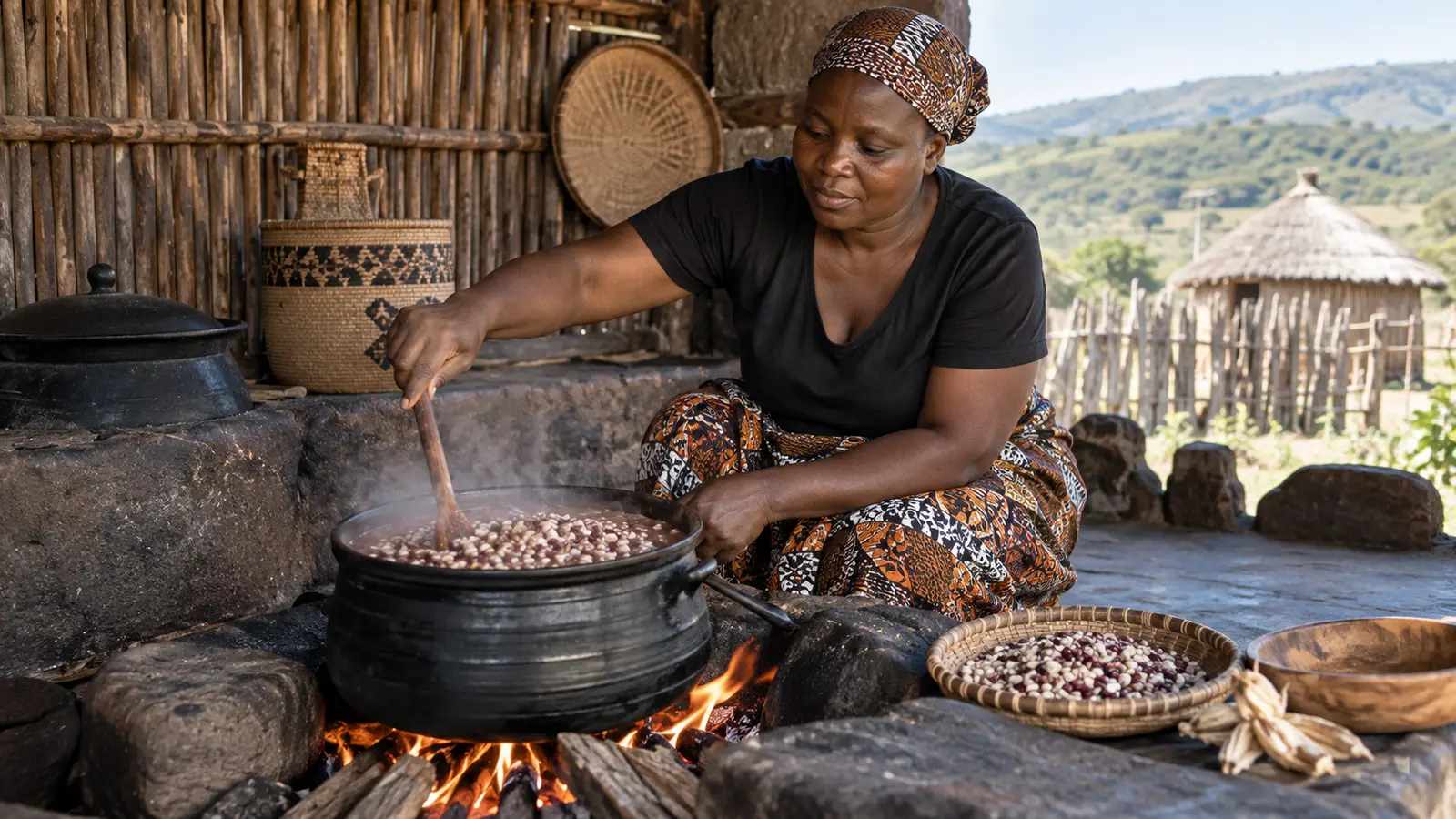
Umngqusho is made from samp—dried maize kernels that have been cracked or stamped—and beans, cooked slowly until both soften and share their starch. It is strongly associated with Xhosa households in South Africa’s Eastern Cape, although recipes travel nationally. Some cooks keep it spare; others add onion, fat, stock, meat or seasoning.
The dish asks for planning rather than spectacle. Beans may be soaked, the pot watched over hours and liquid adjusted as the grains swell. Its texture records the cook’s judgement: nourishing and tender, but not reduced to paste. In communal settings, a large pot converts inexpensive staples into dependable abundance.
Behind it are maize and bean farmers, millers, wholesalers, market traders and household cooks. Drought, electricity costs and food-price inflation affect the plate directly. Celebrating umngqusho while ignoring the affordability of its ingredients would separate culture from the households that sustain it.
Pressure cookers and packaged samp shorten preparation, while restaurants reposition the dish as heritage cuisine. Neither development cancels its home history. The meaningful question is whether convenience and prestige continue to respect the people whose everyday food knowledge made the dish valuable.