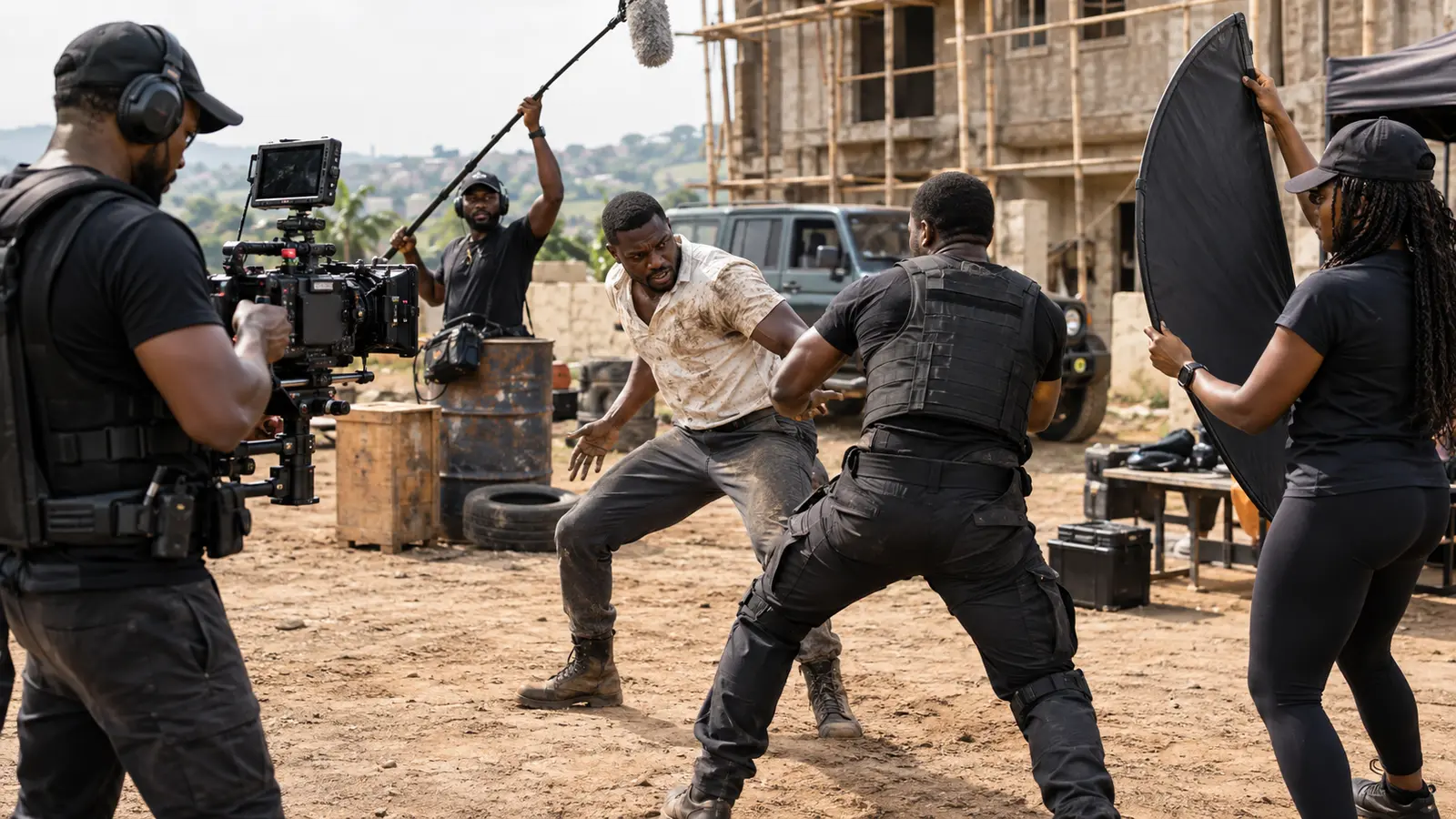
An action scene is successful only when danger looks uncontrolled while the production remains controlled. Nollywood’s appetite for crime thrillers, epics and urban spectacle has grown faster than the safety systems surrounding falls, fire, vehicles and weapons. Heroism on camera must not be purchased with preventable injury behind it.
A stunt coordinator breaks a sequence into hazards, matches actions to trained performers, rehearses at reduced speed and specifies mats, rigging, protective clothing and camera positions. Weapons are checked, vehicles are isolated from public traffic and emergency responses are planned. The risk assessment is part of the choreography, not paperwork completed after decisions are made.
Speed creates the most dangerous temptation. When a location is expensive and daylight is disappearing, producers may compress rehearsal or ask an actor to attempt work beyond training. Yet one accident can stop the film, harm a family and expose a company whose verbal assurances provide neither treatment nor compensation.
Nigeria needs recognised coordinators, specialist training, equipment rental, insurance products and incident reporting that allows the industry to learn. Commissioners and platforms can accelerate change by making safety plans a condition of finance. Unions and guilds should define minimum standards that apply to small productions as well as prestige films.
Spectacle is craft, not recklessness. The audience should gasp because editing, performance and physics have been intelligently arranged—not because nobody knew what might happen. The strongest action industry will be the one whose workers can build daring careers and still return home intact.