
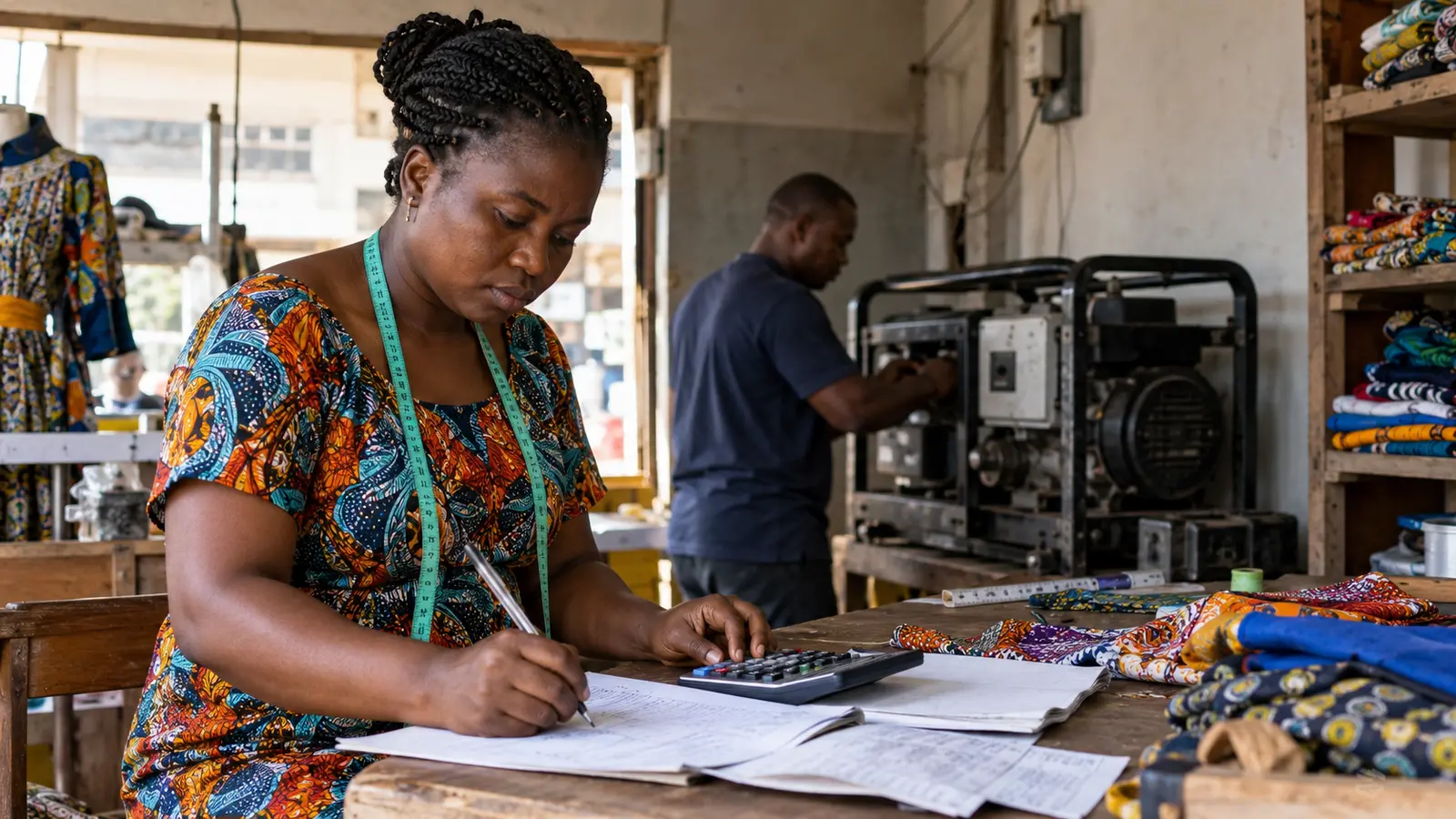
For Nigerian small businesses, electricity is a balance-sheet problem because the commercial decision reaches far beyond a single announcement. Generators, fuel and damaged equipment consume money that could hire workers or expand stock.
The World Bank tracks electricity access and reliability as core constraints on enterprise.
For a Nigerian shop or workshop, electricity is not an abstract sector statistic. It is generator fuel, damaged equipment, spoiled stock, noise and hours when workers cannot produce.
Businesses combine grid supply, petrol or diesel, batteries and solar according to cash rather than efficiency. High upfront costs keep smaller firms locked into expensive daily purchases.
Reliable distribution, transparent metering and finance for productive solar systems can release money for hiring and inventory. Tariff reform must be matched by measurable service.
A credible power transition should be measured in productive hours gained.
The correct power indicator is productive time gained. A business experiences reform when machines run, cold rooms hold temperature and the owner can forecast energy cost before setting a price.