A beautiful Nollywood frame can collapse the moment a refrigerator hum swallows a confession or traffic changes between two cuts. Sound is not a technical layer added after the ‘real’ film; it is half of the audience’s evidence that a world exists. Credibility enters through the ear before many viewers know what disturbed them.
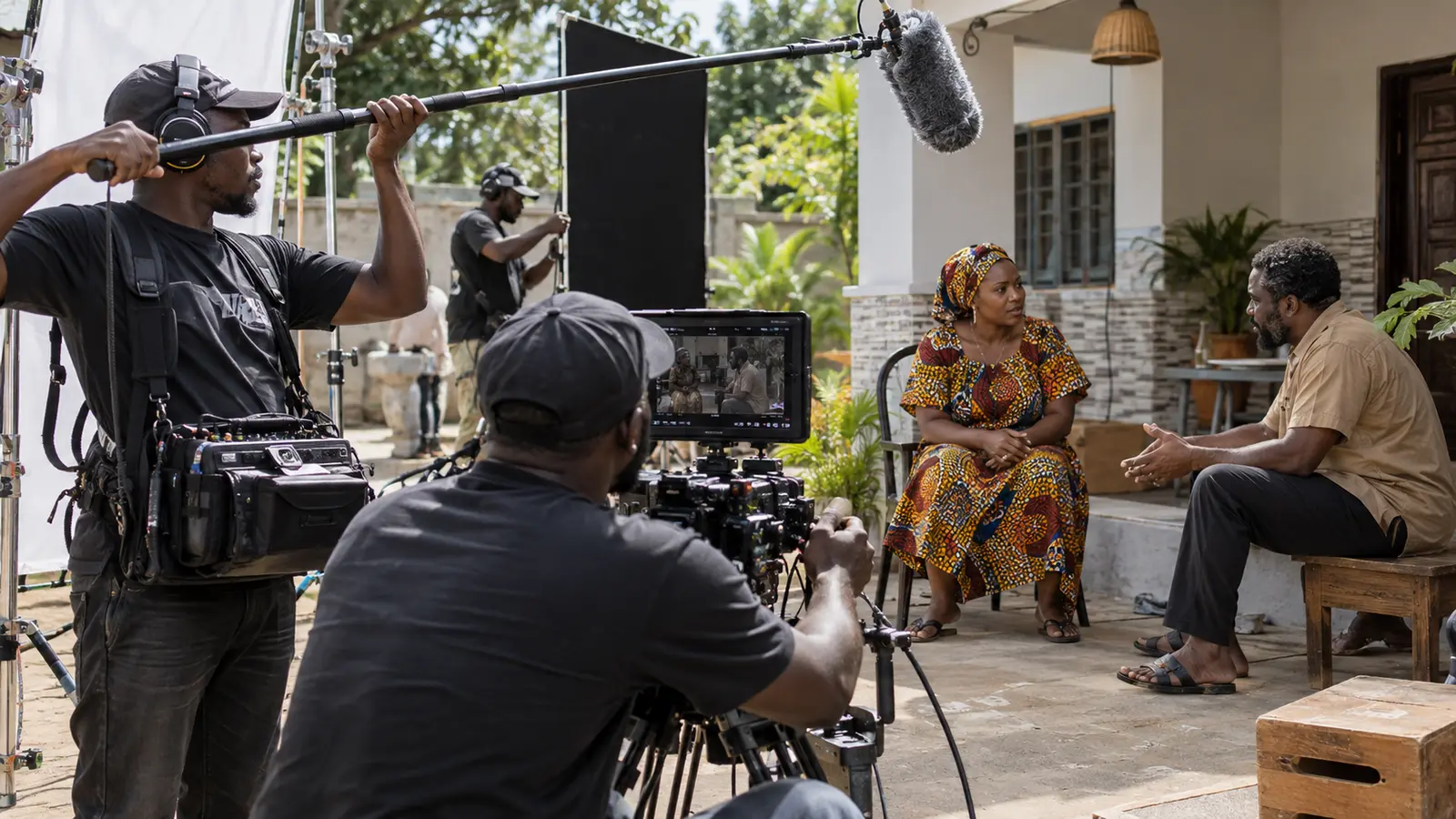
The work begins on location. A production mixer studies generators, aircraft, clothing rustle and reflective rooms, places microphones, records room tone and flags unusable takes. Later, dialogue editors clean and balance speech; Foley artists rebuild footsteps and cloth; effects editors give doors, crowds and weather physical weight; the re-recording mixer makes them coexist with music.
Nigeria’s locations are sonically rich—markets, compounds, churches, traffic, rain on zinc—but richness becomes noise when crews have no time to control it. Directors who schedule a quiet take, costume teams who hide microphones properly and producers who protect post-production days are making creative decisions, not indulging technicians.
Good sound also enlarges distribution. Dialogue that is intelligible on cinema speakers, televisions and cheap phones reduces viewer fatigue; clean stems make dubbing and international sales easier. The department needs recorders, calibrated rooms and training, but its first requirement is budget recognition and a credit that allows practitioners to build reputations.
Nollywood is finally being heard when silence has shape, a room has air and a voice remains intimate without sounding detached from its surroundings. The achievement is not louder filmmaking. It is purposeful listening—and the humility to accept that an audience cannot believe what it cannot properly hear.