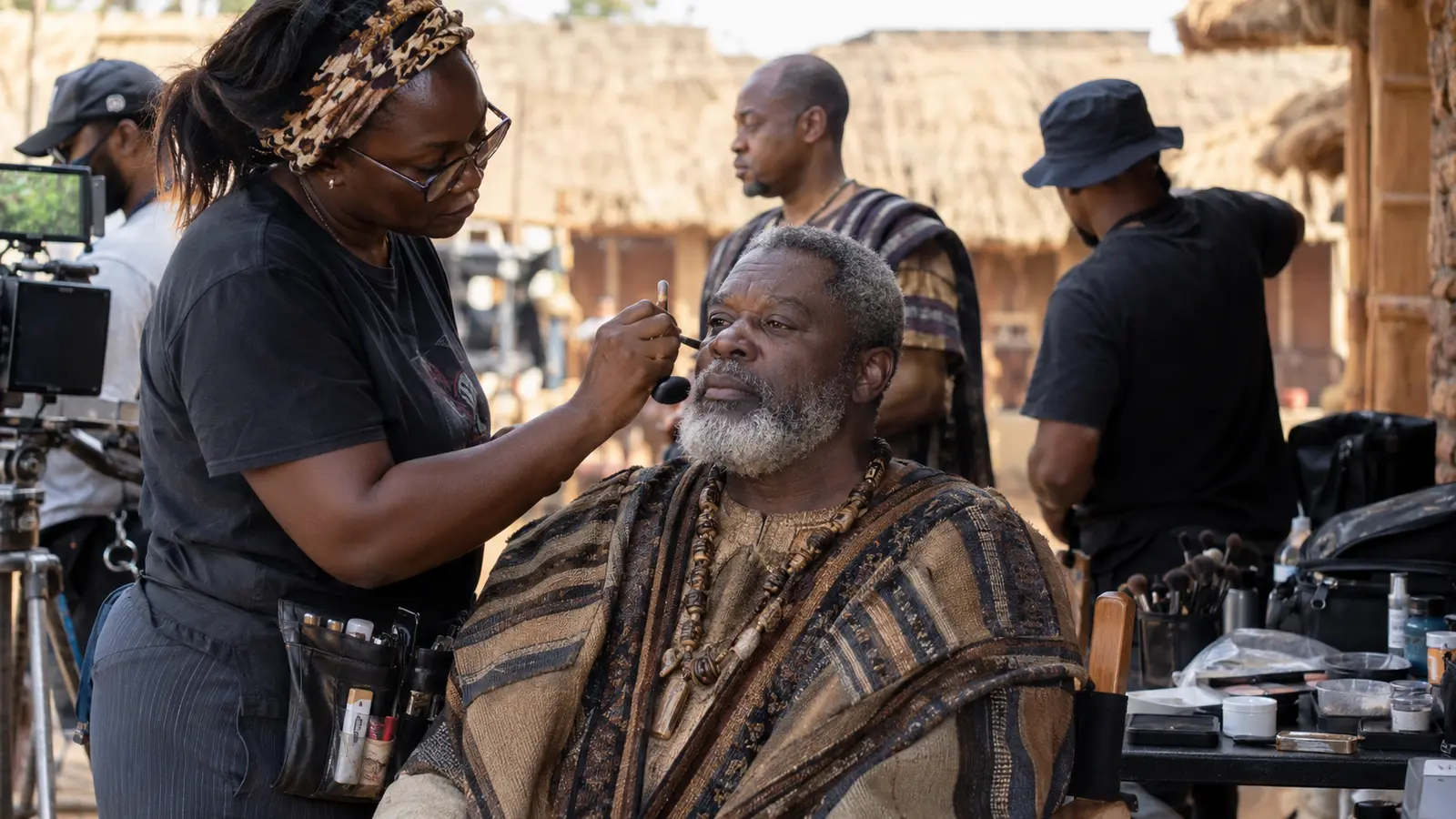
Screen makeup must survive a closer gaze than ceremonial beauty. A bruise has to age between scenes; sweat must match the hour of the story; a historical face must feel lived-in rather than painted. When the work is convincing, audiences see the character and overlook the department that made belief possible.
Preparation begins with script breakdown. Artists chart wounds, illness, age, weather and daily continuity, test products on skin and photograph every stage. Prosthetics may be sculpted, moulded and coloured; wigs and facial hair need ventilation and secure application. Nigerian heat and long shooting days turn product choice into safety and engineering.
Historical and ethnic detail requires research, not a generic darkened face or arbitrary tribal mark. Artists should consult images and communities, distinguish permanent markings from theatrical symbols, and refuse transformations that reproduce caricature. The actor’s skin and dignity remain part of the workplace.
The department supports cosmetologists, wig makers, sculptors, suppliers and assistants. Producers often underestimate prep and removal time, then blame continuity errors on the artist. Dedicated workspaces, sanitation, material budgets and full credits allow specialists to build portfolios and train others.
Makeup effects prove that invisible craft can create the strongest image. The goal is not to display latex or contouring; it is to let history, injury or age register without breaking performance. Nollywood’s faces become more believable when artists receive the research time required to disappear into them.