
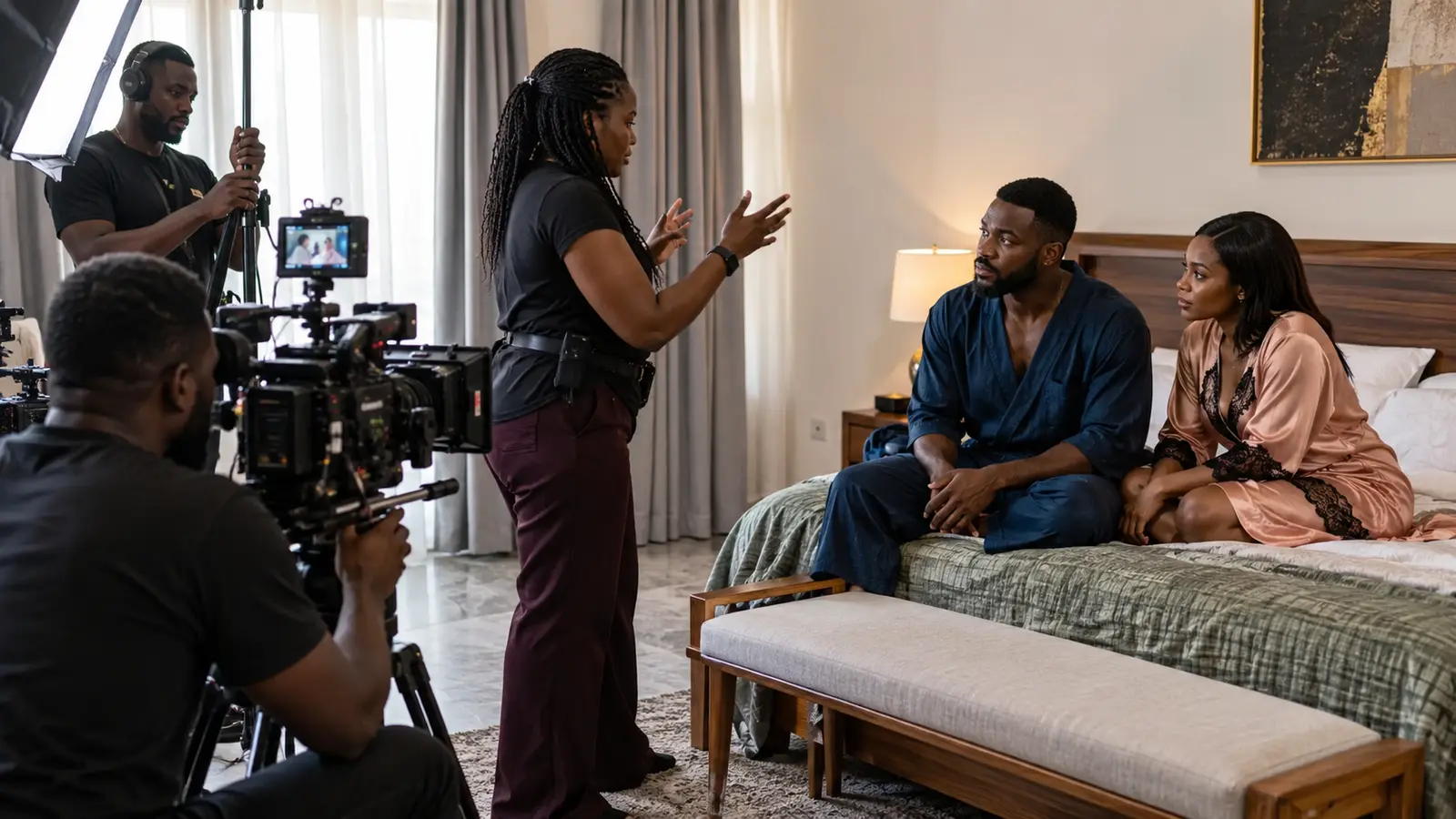
Intimacy on screen depends on the illusion of spontaneity, but safety depends on removing uncertainty from how that illusion is made. An intimacy coordinator helps translate a director’s dramatic intention into agreed, repeatable physical action. The role protects performers while giving the camera a clearer performance to capture.
Before filming, the coordinator discusses the scene with actors separately, identifies boundaries, agrees permitted contact and plans modesty garments or barriers. On set, the movement is choreographed like a fight or dance, the crew is limited to essential personnel and consent is checked without forcing an actor to negotiate publicly with a powerful producer.
This matters in Nollywood, where compressed schedules, informal hiring and reverence for senior figures can make refusal costly. A contract clause is not enough if a young performer believes that saying no will end a career. A trained intermediary creates language and procedure where hierarchy previously relied on silence.
Some fear that coordination cools chemistry. The opposite is usually true: actors who know the boundaries can concentrate on emotion rather than anticipate surprise. Producers also reduce the risk of injury, allegations, abandoned scenes and reputational damage. Professional consent is therefore both an ethical safeguard and production management.
The aim is not to sanitise Nigerian stories or forbid difficult desire. It is to ensure that the vulnerability visible in the finished film belongs to the character, not to an unprotected actor. Artistic courage becomes more credible when the workplace producing it is disciplined enough to respect a human boundary.