
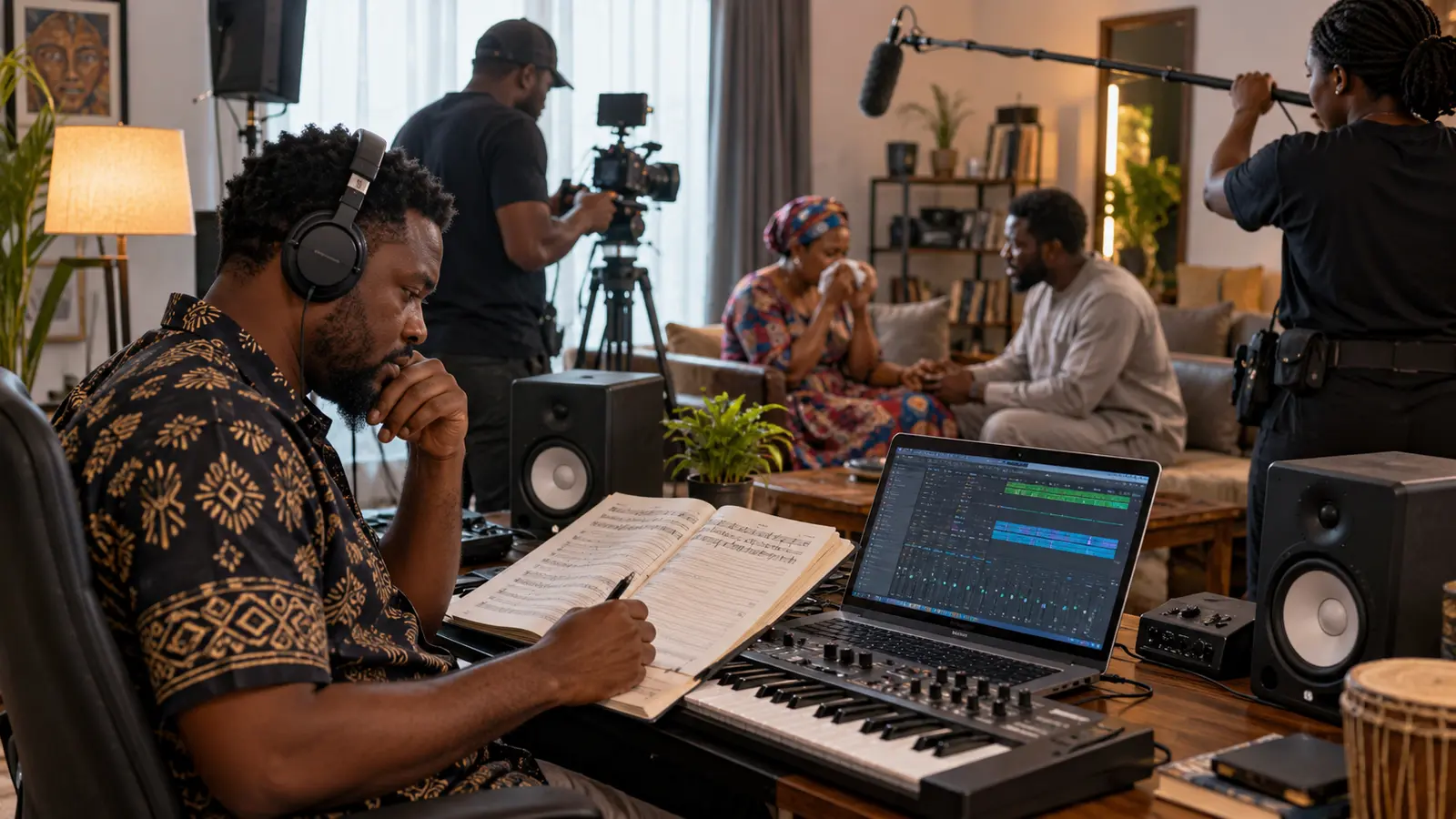
A film score enters where dialogue ends. It can disclose fear beneath a smile, connect separated places or remind viewers of a promise made an hour earlier. Nollywood composers increasingly combine orchestral writing, electronic production and Nigerian instruments, but the value lies in dramatic judgement rather than how many sounds a cue contains.
The composer begins by spotting the film with the director: deciding where music starts, stops and remains absent. Themes are developed for characters or ideas; mock-ups are revised against picture; musicians may be recorded; stems are mixed for dialogue and effects. A score written before the edit settles can be destroyed by constant picture changes.
Cultural sound demands specificity. A talking drum, ogene or flute should not appear merely to announce ‘Africa.’ Players and tradition bearers can shape rhythm, tuning and context. Original composition is strongest when it learns from musical languages without pretending ownership of knowledge it has only sampled.
Contracts must state fee, publishing share, soundtrack rights and future use. Cue sheets allow broadcasters and collecting societies to track performances. Without them, a film may travel internationally while the composer receives neither accurate credit nor royalties.
Music becomes memorable when it serves story so precisely that viewers carry the emotion after forgetting the mechanism. Nollywood does not need continuous wallpaper telling audiences when to laugh or grieve. It needs composers trusted with silence, structure and the legal ownership of what they create.