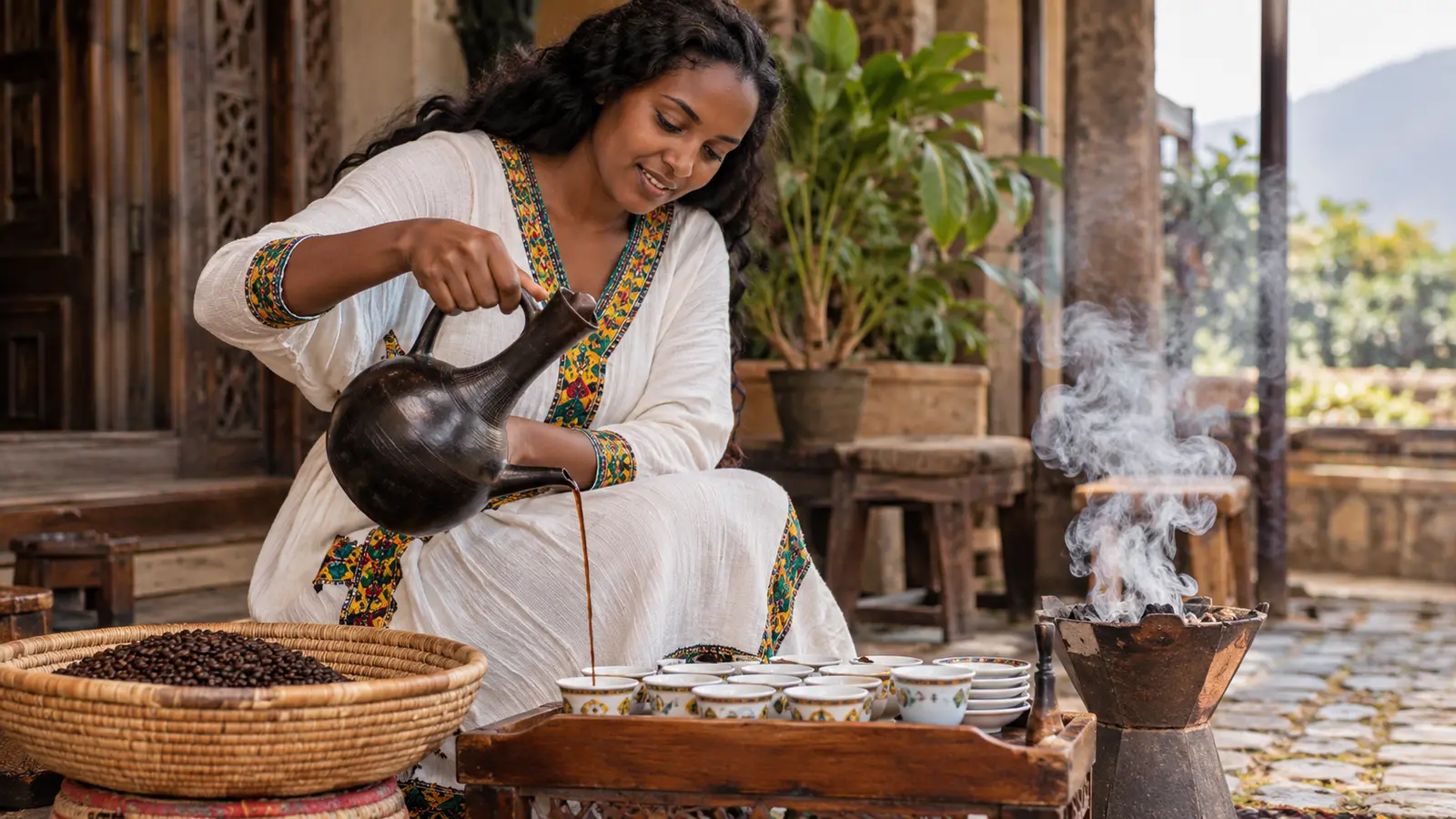
In Ethiopian homes the coffee ceremony is work, welcome and conversation arranged around a small hearth. Practices vary by household and region, but the host commonly washes and roasts green beans where guests can smell them, pounds the roast, brews it in a clay jebena and pours from a height into small cups. Grass, flowers, incense or popcorn may frame the setting.
Three successive rounds—often called abol, tona and bereka—slow the visit down. The ceremony creates time for neighbours to exchange news, settle tensions and mark births, mourning or ordinary friendship. Women have historically carried much of this skilled hospitality labour, although urban cafés and male professionals now perform commercial versions.
Coffee links the domestic ritual to Ethiopia’s export economy. Farmers, washing stations, traders, roasters, potters and café workers all depend on the crop, yet volatile prices and climate stress can leave growers with the weakest share. A responsible account celebrates the cup while asking who was paid along the chain.
Electric grinders and espresso bars have not ended the ceremony. They have made the deliberate home version more clearly distinct from everyday caffeine. In Addis Ababa and across the diaspora, people shorten, adapt or stage it, but its essential offering remains attention: the guest is worth the time required to roast, brew and pour.