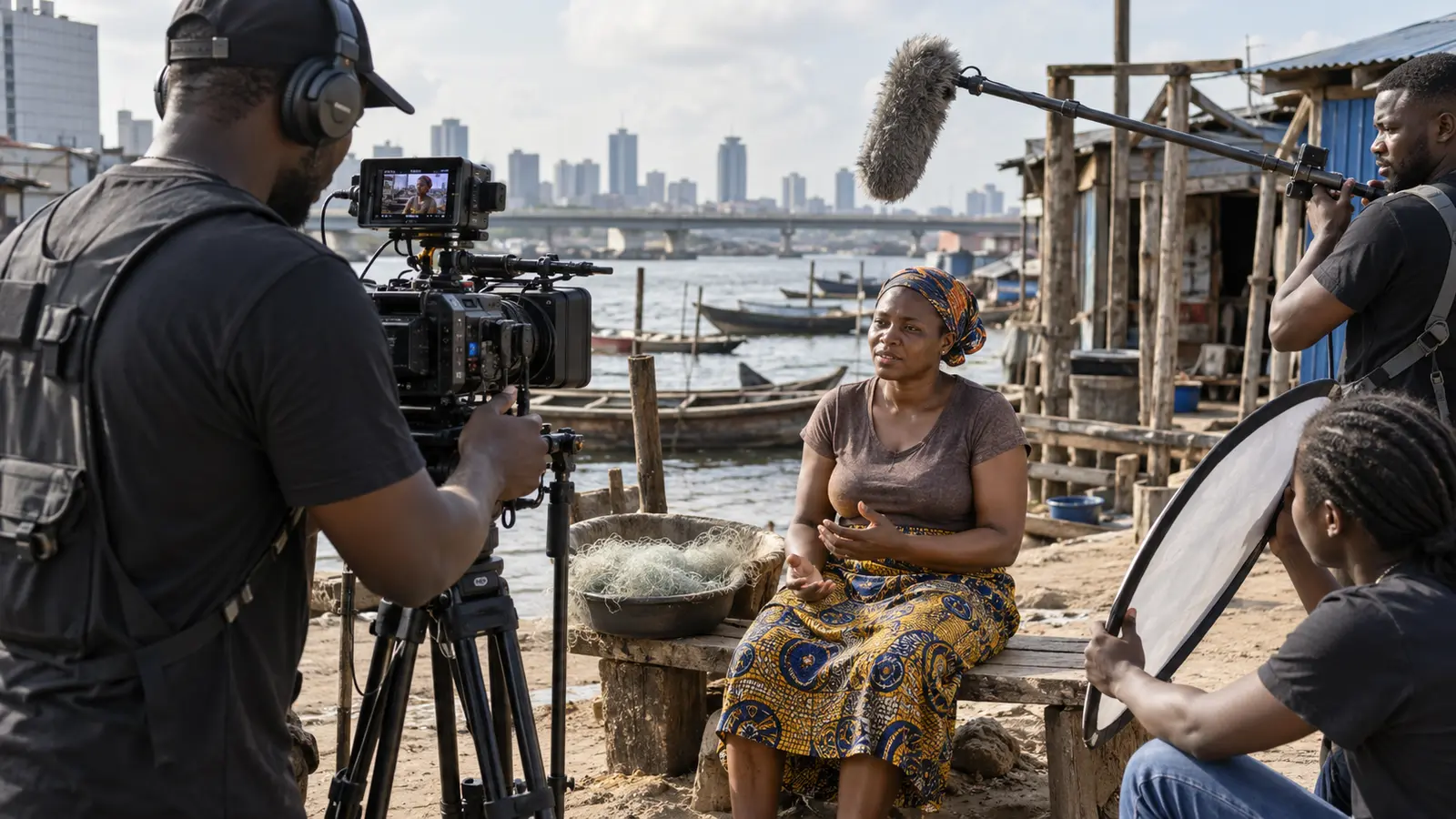
Nigeria does not suffer from a shortage of dramatic reality; it suffers from how quickly evidence disappears. Documentary filmmakers are turning court records, family archives, landscape, testimony and patient observation into public memory. Their task is not merely to find an important subject, but to discover the cinematic form through which that subject can be honestly understood.
Research precedes the camera. Claims must be corroborated, dates checked and gaps acknowledged. Interviews require more than eloquent questions: a director must recognise trauma, power and the possibility that publication could expose a contributor to danger. Consent is an ongoing relationship when the consequences of a film change during production.
The strongest documentaries resist two easy roles—the government brochure and the misery catalogue. Nigeria’s oil communities, artists, markets, elections and private families contain agency alongside harm. Observation, contradiction and silence can reveal more than a narrator who tells viewers what every image is supposed to mean.
Financing remains difficult because research takes time and broadcasters often prefer immediate topicality. Filmmakers need archival access, legal review, insurance, secure data and distribution beyond festivals. Public institutions should preserve records without controlling conclusions; platforms should licence films on terms that return value to their makers.
Documentary is not neutral in the sense of having no point of view. Its integrity lies in making the route to its conclusions visible and giving reality room to resist the filmmaker’s thesis. When evidence becomes cinematic without becoming propaganda, a country gains a record capable of challenging both power and forgetting.