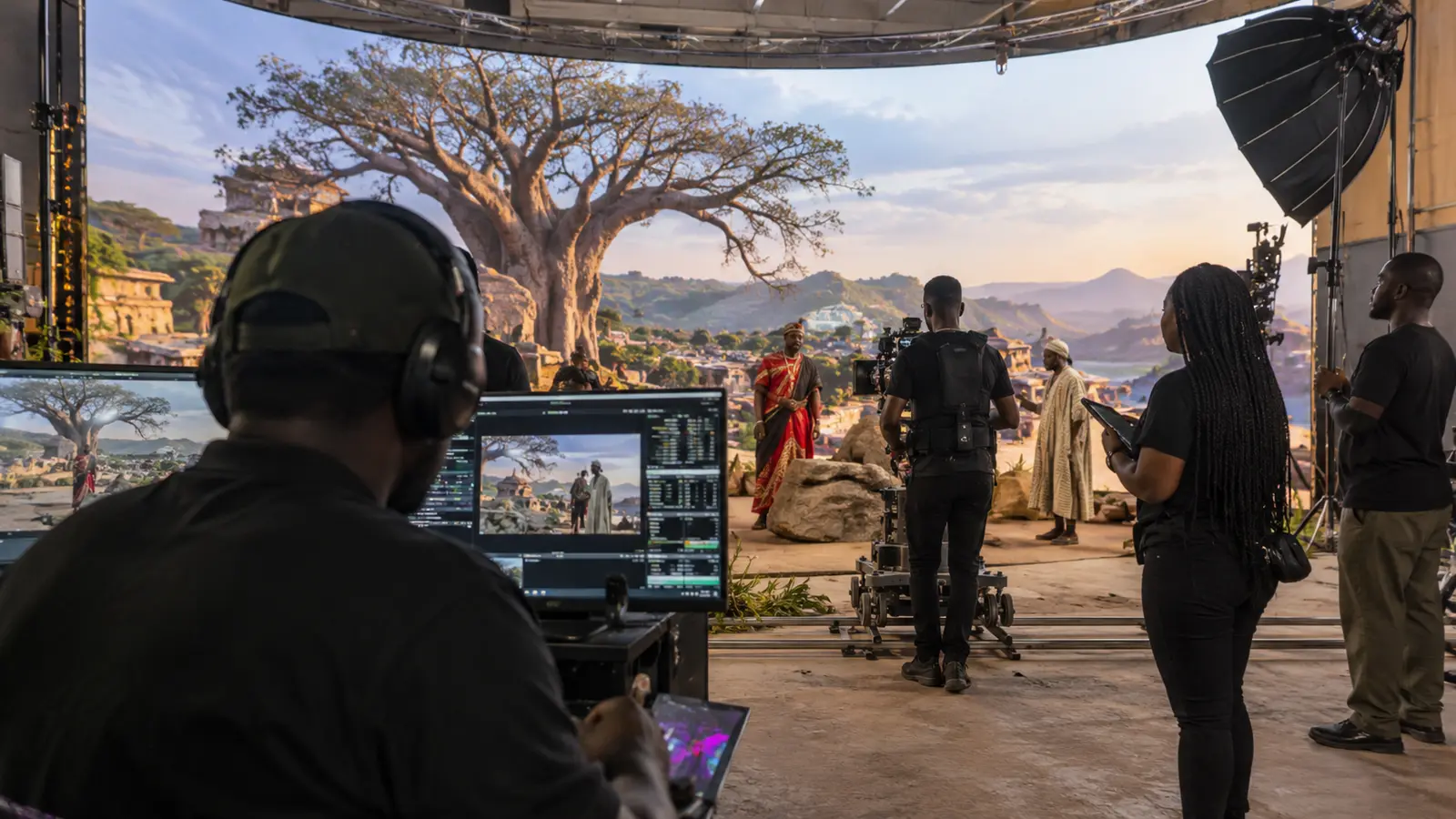
Virtual production promises Nollywood deserts, palaces and futuristic Lagos skylines inside controlled stages. LED walls and real-time engines can place final-looking environments behind actors, but the technology does not remove production problems; it moves many of them earlier, where indecision is more expensive.
Art, camera, lighting and visual-effects teams must build and test digital environments before shooting. Lens data, perspective and screen brightness have to match the physical foreground. Directors need previsualisation, while performers still require tangible eyelines and space. An LED wall without an integrated crew is merely an expensive background.
The method can reduce travel, weather disruption and some post-production uncertainty. It can also produce flat images, moiré and generic asset-library worlds. Nigerian architecture and landscape need original capture and design rather than purchased approximations labelled ‘African city.’
Investment should include training, maintenance, reliable power and access for productions beyond a single studio’s showcase project. Partnerships with game artists, architects and cinematographers could build transferable skills. Budgets must compare virtual work honestly with location and conventional effects.
Technology is useful when the story can name the problem it solves. Nollywood should adopt virtual production neither as prestige nor panic, but as one instrument inside visual authorship. The future arrives through preparation, not through the size of the screen behind the actor.