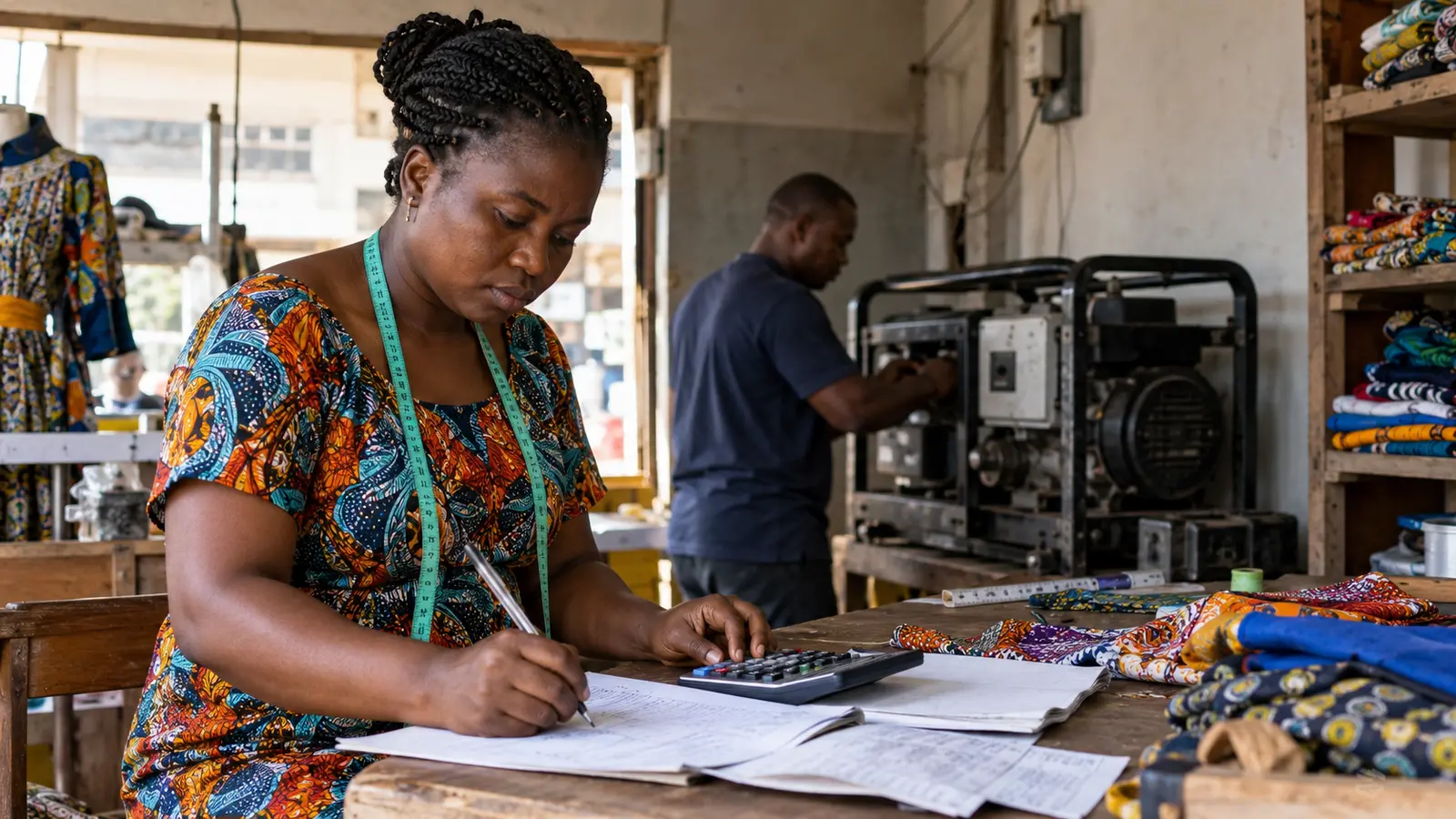
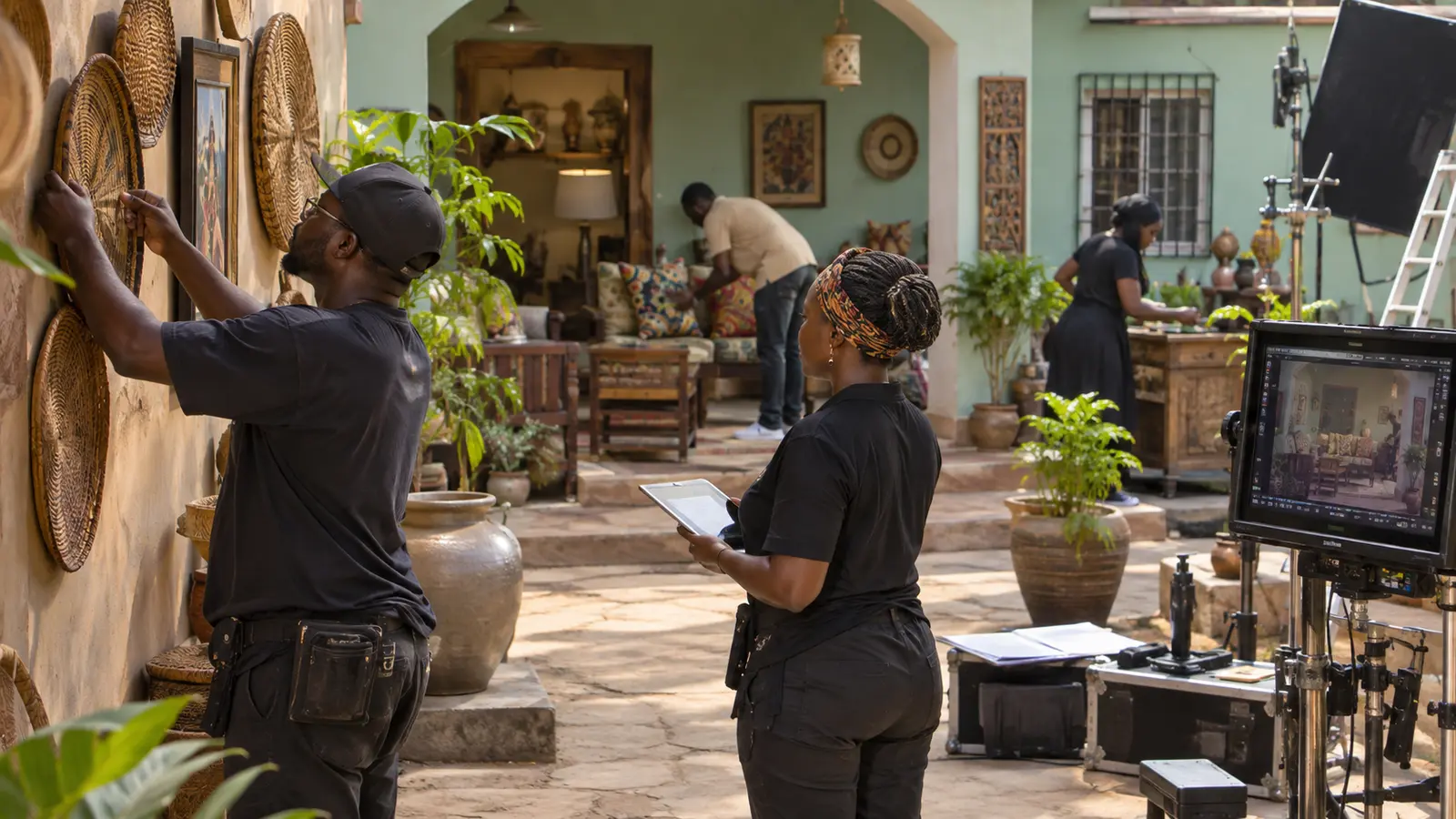
Production design decides what kind of Nigeria exists before an actor enters the frame. A room tells us who has money, what a family hides, which decade shaped its taste and whether anyone actually lives there. When those choices are absent, even an expensive location becomes an empty showroom.
The designer translates the script into visual rules: research, colour, architecture, furniture, graphics and props. Art directors organise execution; buyers and builders source or make objects; set decorators create use and history. Every calendar, food package and wall stain can support or contradict the story.
Nollywood’s compressed schedules tempt productions to accept whatever a rented mansion already contains. That convenience produces repetition and makes unrelated characters inhabit the same aspirational world. A modest, specifically dressed room can reveal more than marble if its objects belong to the person written.
The department creates economic links with carpenters, painters, welders, sign writers, antique dealers and local craftspeople. Budgets should include restoration and safe materials. Cultural objects require provenance and consultation; sacred or historical items are not neutral decoration.
Production design is disciplined authorship in physical space. It protects cultural detail from cliché because it asks where an object came from, who uses it and what it costs the character. The Nigerian screen becomes larger not when every set is grand, but when every world is internally true.