
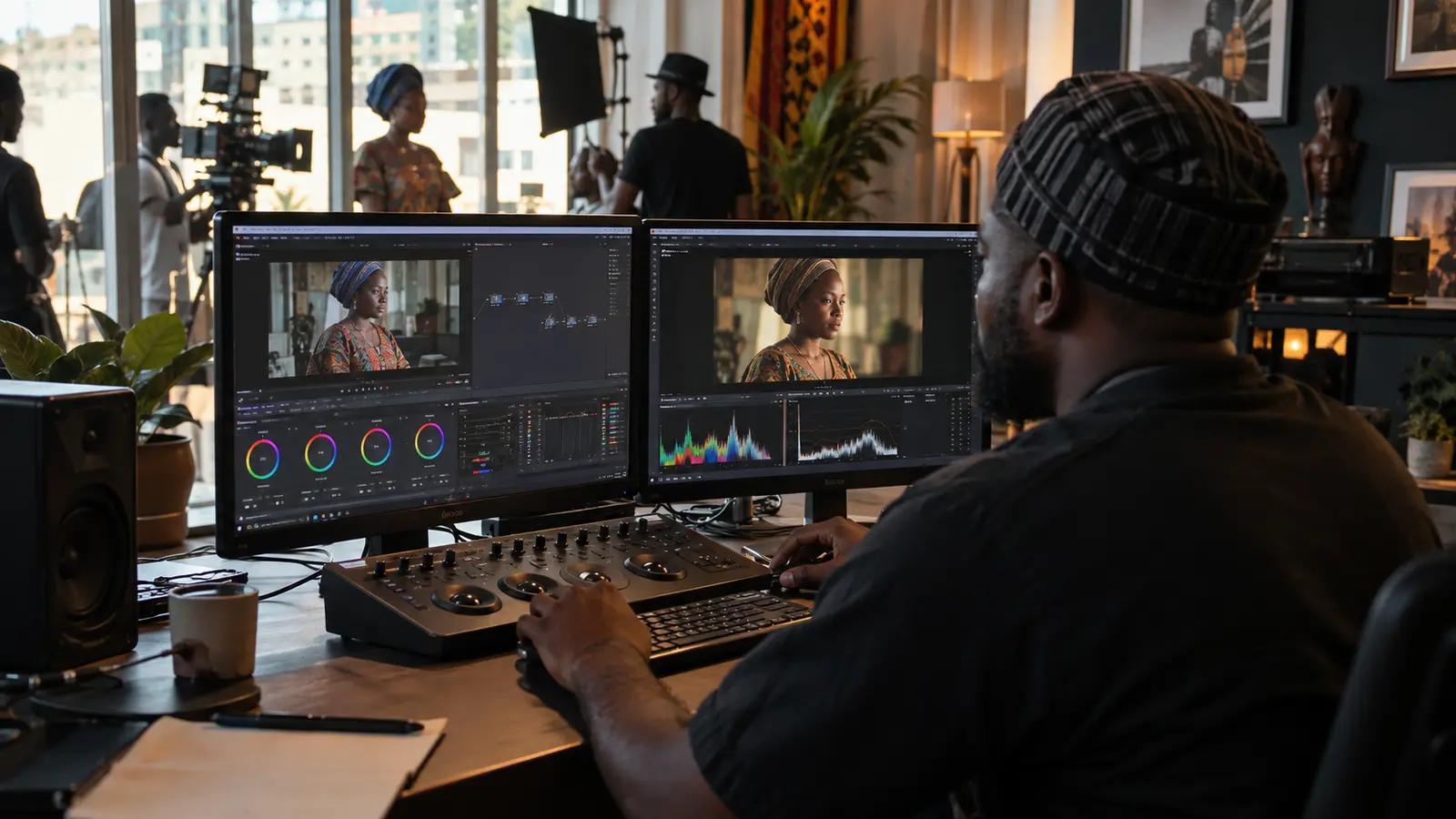
Colour grading is where Nollywood’s separately photographed scenes learn to belong to one visual world. It can guide the eye, distinguish memory from present time and protect skin tone across locations. It cannot, however, recover detail that poor exposure never recorded.
The process starts with colour management: knowing how cameras encoded light and how monitors display it. A colourist balances shots, matches cameras, shapes contrast and then develops a creative palette with the cinematographer and director. Work must be checked on calibrated displays before versions are made for cinema, television and phones.
Fashionable grades can become another cliché—orange skin, crushed shadows or blue night applied regardless of story. Nigerian complexions contain wide tonal variation; preserving undertone and highlight detail is both technical competence and respect for performance.
A strong workflow requires data storage, reliable power, controlled rooms and sufficient revision time. Producers who postpone the grade until delivery day create expensive compromises. Training local colourists retains post-production spending and builds a recognisable technical sector.
Confidence in colour is restraint with purpose. The audience should feel heat, intimacy or danger without noticing a filter insisting upon it. Nollywood’s final language becomes mature when the grade answers the drama instead of advertising the software.