
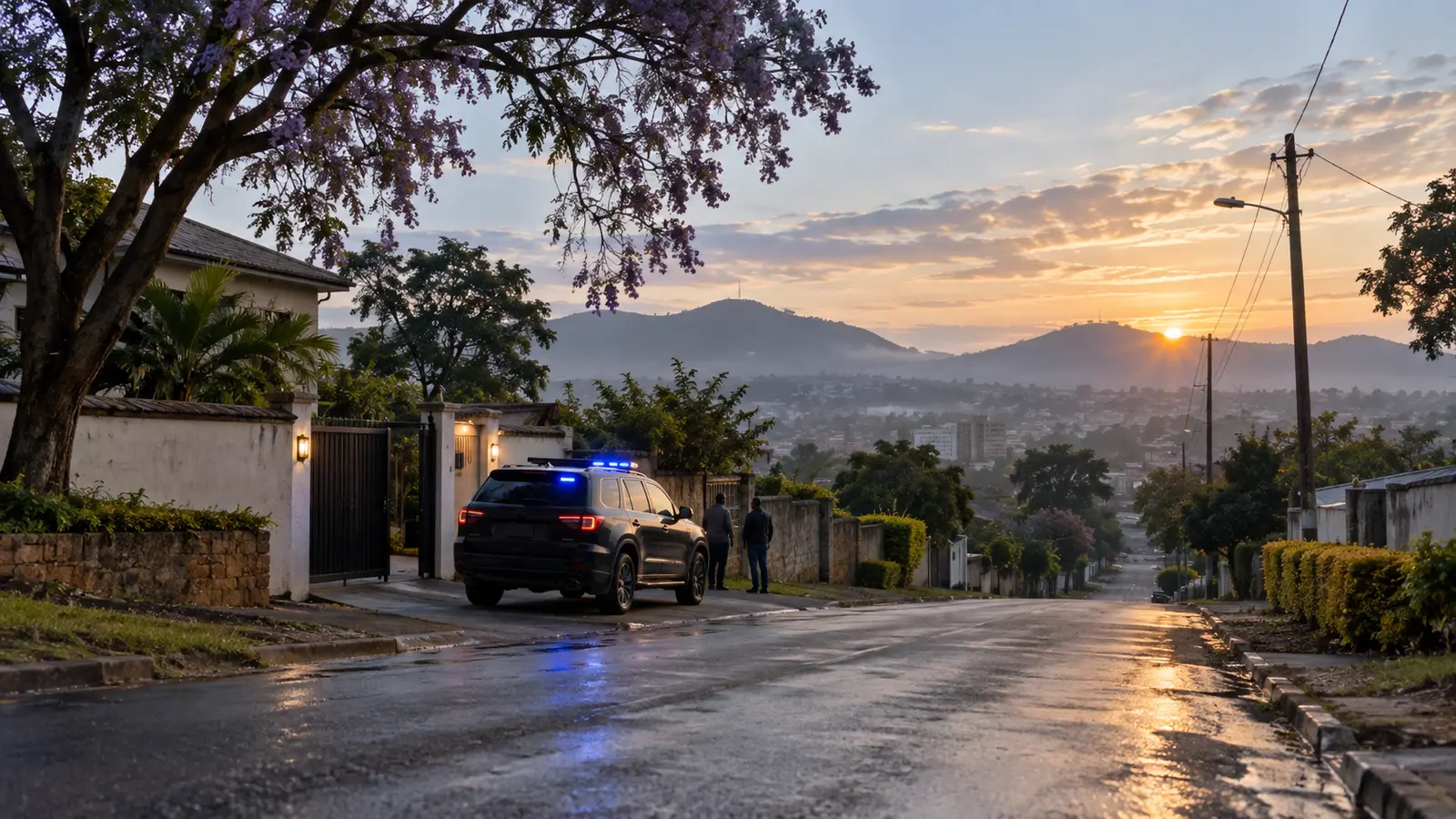
Malawi police rescued British national Nusrat Jiwa Osman in Blantyre on Thursday, 17 September 2026, six days after four men abducted her in the city’s Mount Pleasant neighbourhood. Police said the 47-year-old auditor was safe and reunited with her family after the operation. Her recovery is confirmed; claims about why she was targeted remain unproven.
The Malawi Police Service said officers exchanged fire with four suspected kidnappers who were armed with an AK-47 rifle and a pistol. Police said the suspects were shot and later died from their injuries. The Associated Press reported the official toll as four dead, while Reuters described the operation as intelligence-led and said the kidnappers died after being taken to hospital.
A six-day search ended in Chadzunda
Local reporting placed the rescue in Chadzunda, Blantyre. The Times Group reported that Deputy Inspector General of Police Noel Kayira led the police team and was shot during the operation, citing Homeland Security Minister Peter Mukhito. Police said the senior officer was receiving hospital treatment and was in stable condition.
Osman was abducted around lunchtime on Friday, 11 September, after men travelling in a grey vehicle intercepted her in Mount Pleasant. Police subsequently appealed for information and offered 30 million Malawian kwacha — reported by international outlets as about US$17,000 — for information leading to her rescue and the arrest and conviction of those responsible.
The police statement did not explain how investigators located Osman or whether the public reward produced the decisive information. It also did not disclose the suspects’ identities. Those gaps matter because a completed rescue operation is not the same as a completed criminal investigation, and the evidence behind the police account has not yet been tested in court.
What police have confirmed — and what remains unknown
Authorities said no clear motive had been established. Earlier reporting said the abductors had not contacted Osman’s family or police with a known ransom demand. It would therefore be premature to label the case a ransom kidnapping, politically motivated attack or targeting based on nationality without further evidence.
Police said their investigation is continuing. Questions still requiring public answers include whether anyone else planned or assisted the abduction, what evidence was recovered from the scene, whether the kidnappers held Osman at more than one location and how officers assessed the danger before the exchange of fire.
The operation also leaves a duty to account for the use of lethal force. The police version is that armed suspects fired during the rescue and officers responded. Independent scrutiny, medical records and a clear investigative report would help establish the sequence while protecting the integrity of any proceedings against additional suspects who may emerge.
Why the case matters beyond one family
Osman is originally from Leicester and has lived and worked in Malawi, according to British and Malawian reporting. Her case drew attention in both countries because she is a British citizen and because a daylight abduction in a residential part of Blantyre challenged Malawi’s reputation as a comparatively safe destination for residents, business travellers and visitors.
Current United Kingdom travel guidance says there are occasional reports of criminal kidnappings for ransom in Malawi and notes that British nationals have been among the people targeted. That general warning provides context, but it does not establish the motive in Osman’s case. Travellers and residents should rely on official local security advice rather than treating one incident as proof of a wider pattern without data.
The immediate outcome is that Osman is alive and back with her family, while the wounded police officer was reported stable. The next stage is less dramatic but essential: a transparent investigation into the abduction, the armed rescue and any wider network, with verified findings replacing the speculation that circulated during the six-day search.