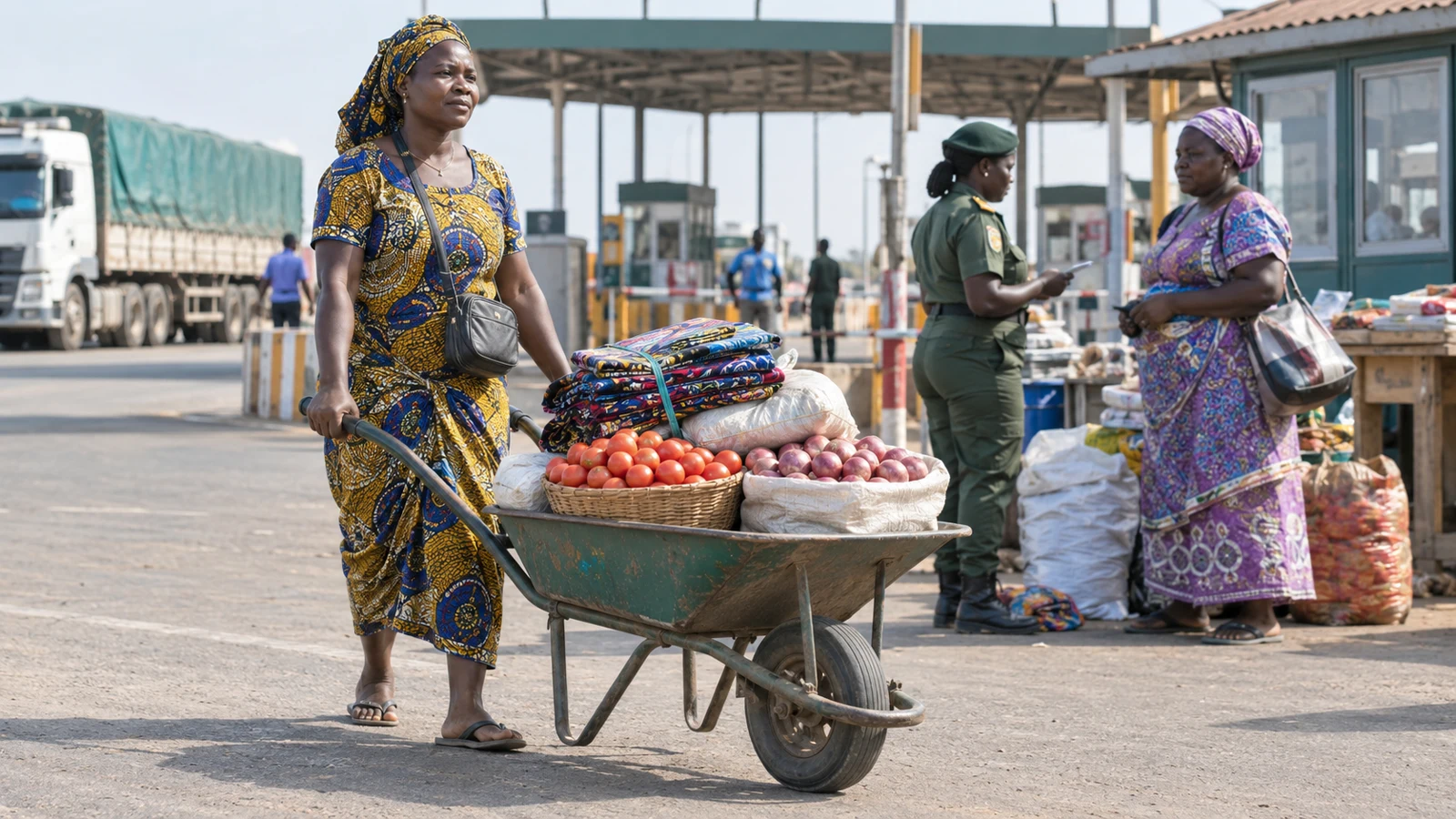
Women traders keep borders moving while carrying the highest friction because the commercial decision reaches far beyond a single announcement. Small-scale commerce connects food, textiles and household goods across West African markets.
Informal fees, harassment and poor facilities raise costs for traders with the least bargaining power.
Across West African corridors, women move vegetables, grain, cloth, cosmetics and household goods in quantities too small for corporate logistics but large enough to feed markets and families. Their trade converts price differences between towns into regional supply.
At a border, small consignments can face the highest proportional cost: repeated inspections, unclear duties, unofficial payments, poor sanitation and hours lost in heat. Harassment becomes a business expense that seldom appears in trade statistics.
Simplified regimes must be written in language traders use, posted publicly and applied consistently. Safe waiting areas, receipts, complaint channels, childcare-aware facilities and women officers can change the economics as much as tariff reform.
Simplified rules and safer border posts can turn survival trade into stronger enterprise.
These traders do not need praise for endurance; they need friction removed. Regional integration becomes real when a woman can calculate her lawful cost before travel and keep enough margin to grow beyond survival.