
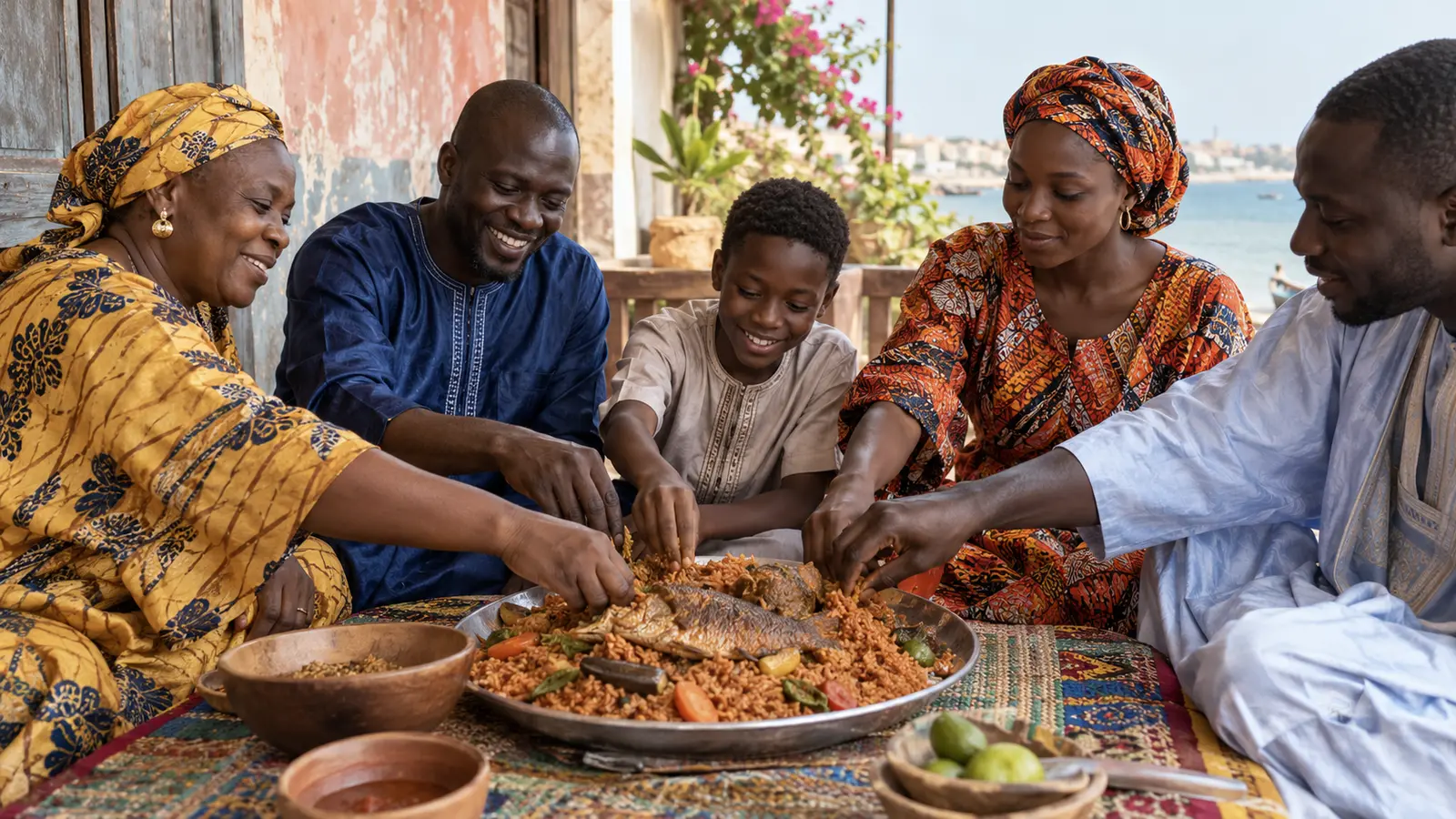
Ceebu jën—rice and fish in Wolof—is closely associated with Saint-Louis and is now eaten across Senegal in many household forms. Fish is stuffed or seasoned with herbs, then cooked with tomato, onion and vegetables; the rice absorbs the concentrated cooking liquid. The technique, not an inflexible ingredient list, creates the dish’s depth.
Preparation distributes knowledge across the kitchen: cleaning fish, pounding seasoning, controlling oil and tomato, choosing vegetables and judging when the rice has taken enough stock without collapsing. A shared platter then gives the meal a social order, with diners eating from the section before them and a host directing prized portions with generosity.
Its economy begins at sea and in the market. Fishers, processors, rice growers, vegetable sellers, transporters, cooks and restaurants all participate. Pressure on fish stocks and the cost of imported or local rice can therefore alter a national dish long before a menu changes.
UNESCO recognition in 2021 affirmed community knowledge rather than declaring one restaurant recipe official. The future of ceebu jën depends on sustainable fisheries, viable local ingredients and the continued authority of cooks whose measurements are held in sight, touch and taste.