
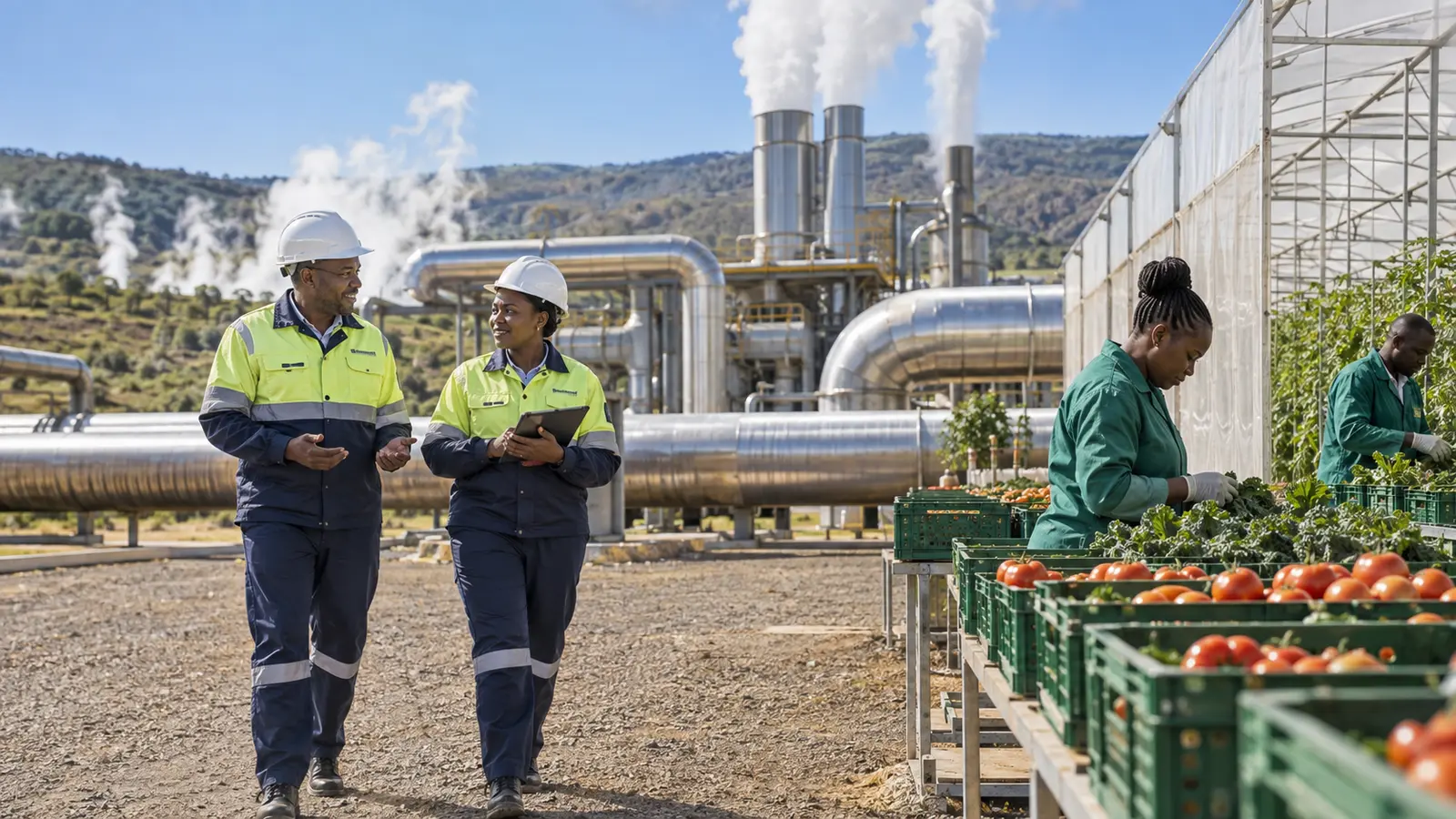
Kenya’s geothermal advantage can power more than the grid because the commercial decision reaches far beyond a single announcement. Steam resources offer relatively steady low-carbon electricity for industry and homes.
Transmission, tariffs and community benefit determine whether generation becomes broad prosperity.
Kenya’s Rift Valley steam provides generation less exposed to rainfall than hydropower and less intermittent than wind or solar. That steadiness can anchor a grid carrying more variable renewable energy.
Exploration is expensive and uncertain: wells may fail before revenue begins. Public risk-sharing and experienced institutions have therefore mattered, but project costs and contracts must remain transparent.
Cheap, reliable power can support cold storage, manufacturing and electric mobility only if transmission reaches users and tariffs reflect efficiency. Nearby communities deserve land consultation, jobs, water protection and a fair share of development.
Geothermal is an important part of Kenya’s electricity mix.
Geothermal advantage becomes industrial advantage when energy reliability lowers the cost of making things in Kenya. Megawatts are the input; productive firms, household access and regional expertise are the return.