
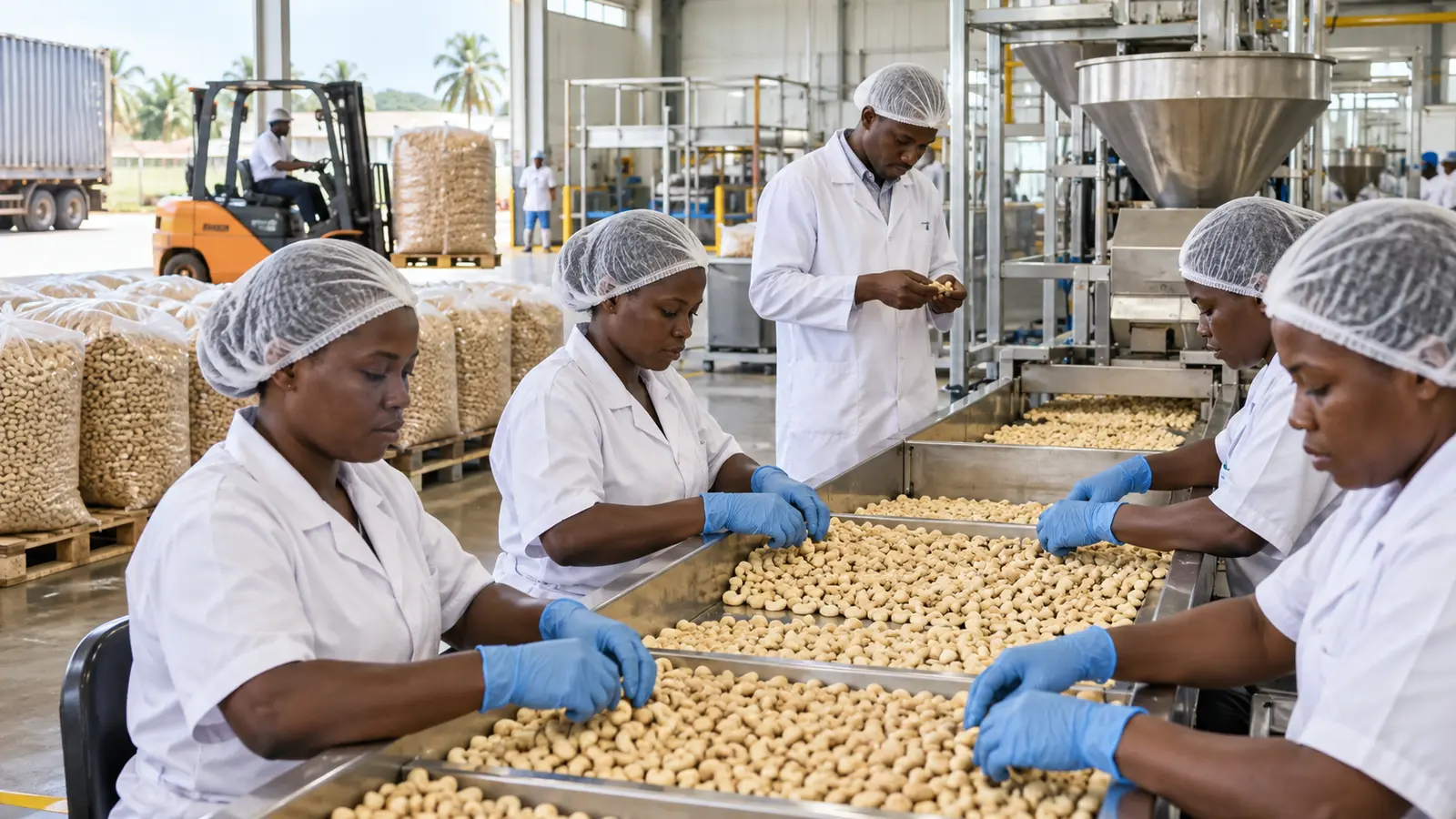
Côte d’Ivoire wants more of the cashew value chain at home because the commercial decision reaches far beyond a single announcement. Local processing can create jobs and reduce dependence on raw-nut exports.
Competitive factories need steady supply, quality control, logistics and markets for by-products.
Côte d’Ivoire produces large volumes of raw cashew, but exporting the nut in shell also exports shelling, grading, roasting and packaging jobs. Domestic processing aims to retain more of that chain.
Factories need dependable nuts of known quality, food-safety controls, skilled maintenance and working capital for seasonal purchases. Broken machines or expensive credit can leave plants idle even when harvests are abundant.
By-products matter: shells can provide industrial energy and cashew apple can support beverages or other products if safety and markets are developed. Farmers must receive price and quality incentives rather than finance industrial gains through lower farm-gate returns.
Value addition is meaningful when producers and workers share the gains.
Value addition is not the percentage processed on a government slide. It is the wages, supplier contracts, technical knowledge and farmer income that remain after the kernel leaves Abidjan for its final customer.