
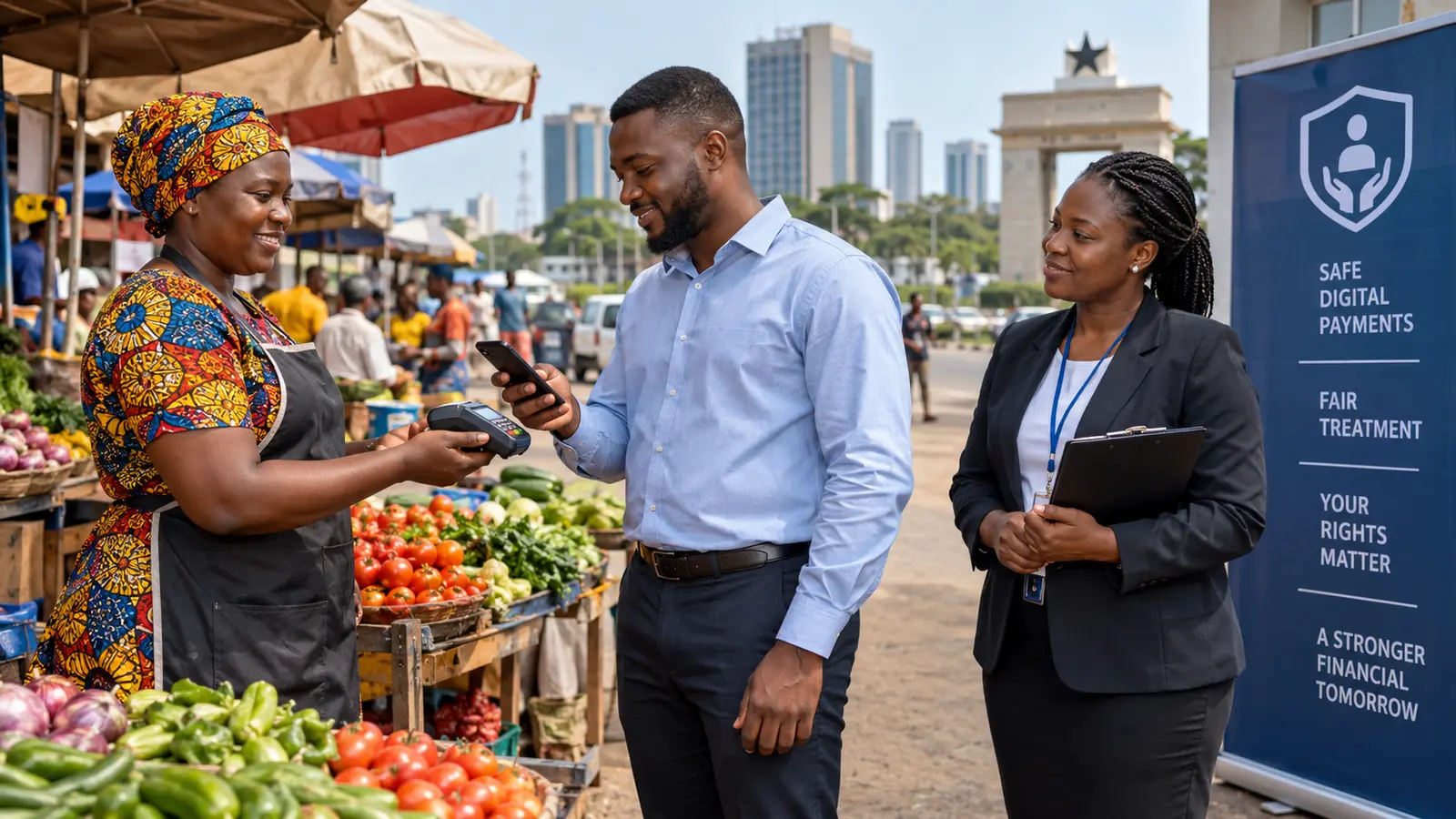
Ghana’s fintech growth enters its consumer-protection era because the commercial decision reaches far beyond a single announcement. Digital payments have widened access and intensified questions about fraud, fees and data.
Fast adoption needs strong dispute resolution and clear responsibility when transactions fail.
Mobile money and digital finance have shortened distance between Ghanaian households and payments, savings or credit. Their next test arrives when a transaction fails and the customer must discover who is responsible.
Fraud exploits urgency, weak authentication and social engineering; opaque fees and automated lending can harm users without criminality. Providers need plain terms, rapid account protection and dispute processes that do not send customers endlessly between bank, network and wallet.
The Bank of Ghana can strengthen trust through licensing, interoperability rules, incident reporting and proportionate supervision. Innovation sandboxes are useful only if consumer lessons become permanent safeguards.
Trust will decide whether first-time users remain active.
Growth built on first-time adoption can disappear after one unresolved loss. Ghana’s fintech era becomes durable when convenience is matched by human support, data restraint and a remedy that works as quickly as the payment did.