
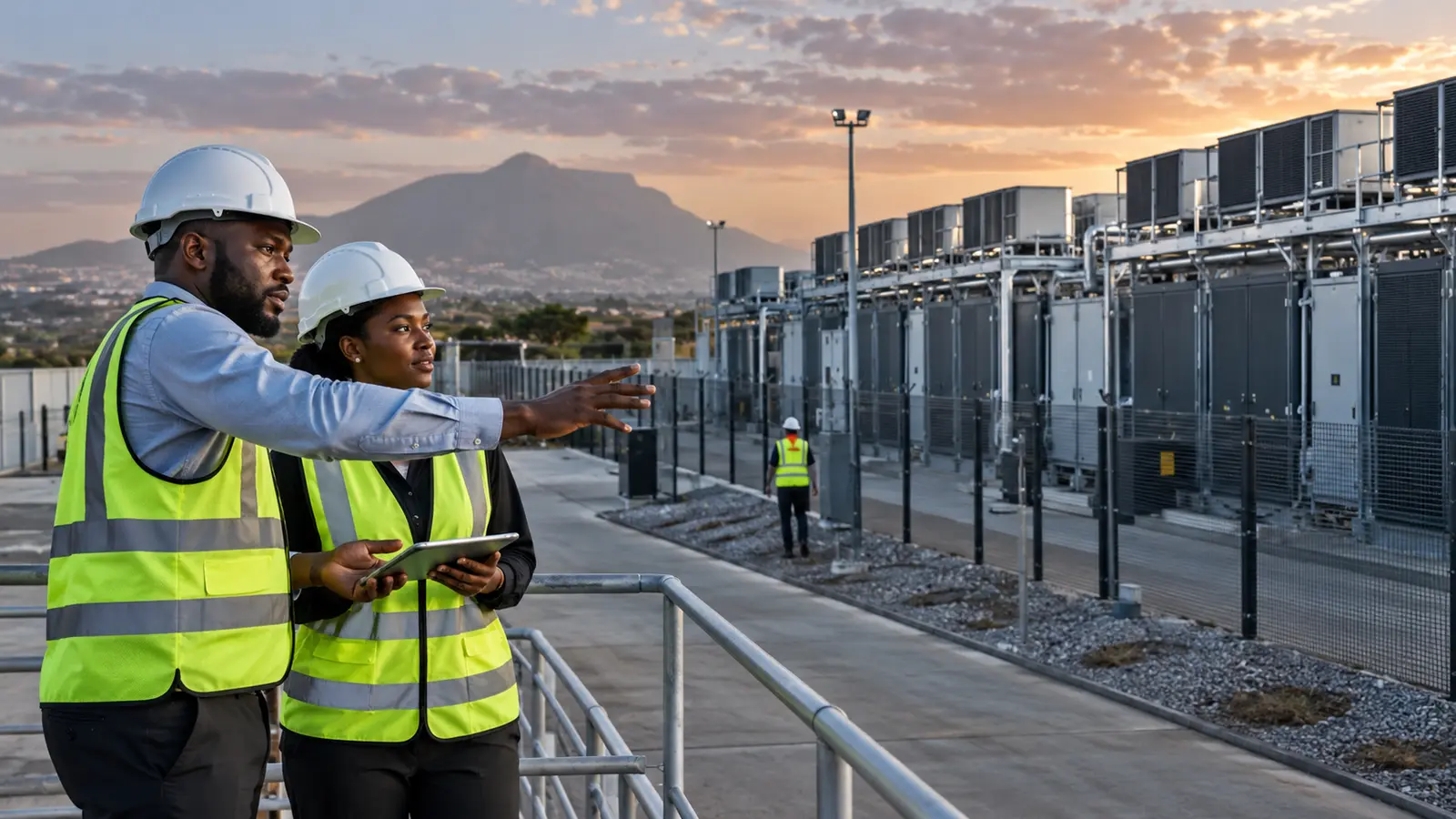
Data centres are becoming Africa’s industrial infrastructure because the commercial decision reaches far beyond a single announcement. Cloud growth is driving investment in power-hungry facilities near major markets.
The opportunity is local capacity; the risks include unreliable electricity, water demand and weak data governance.
A data centre is a factory for digital reliability: racks, fibre, cooling, security and uninterrupted power turn software into a service people can actually reach. Banks, governments and cloud platforms increasingly require capacity closer to African users.
Location reduces latency and may support data-residency requirements, but the building’s environmental ledger matters. Electricity source, backup diesel, water use and obsolete equipment determine whether digital growth transfers costs to surrounding communities.
The sector can train electricians, network engineers, cybersecurity staff and facilities managers, yet imported turnkey systems limit that benefit. Procurement should build local maintenance and supplier capability rather than count only construction jobs.
Digital infrastructure should be judged by resilience, skills and public value.
Africa needs data centres as industrial infrastructure, but capacity alone is not sovereignty. Public value appears when resilient facilities support affordable services, accountable data governance and a workforce able to operate what investors have built.