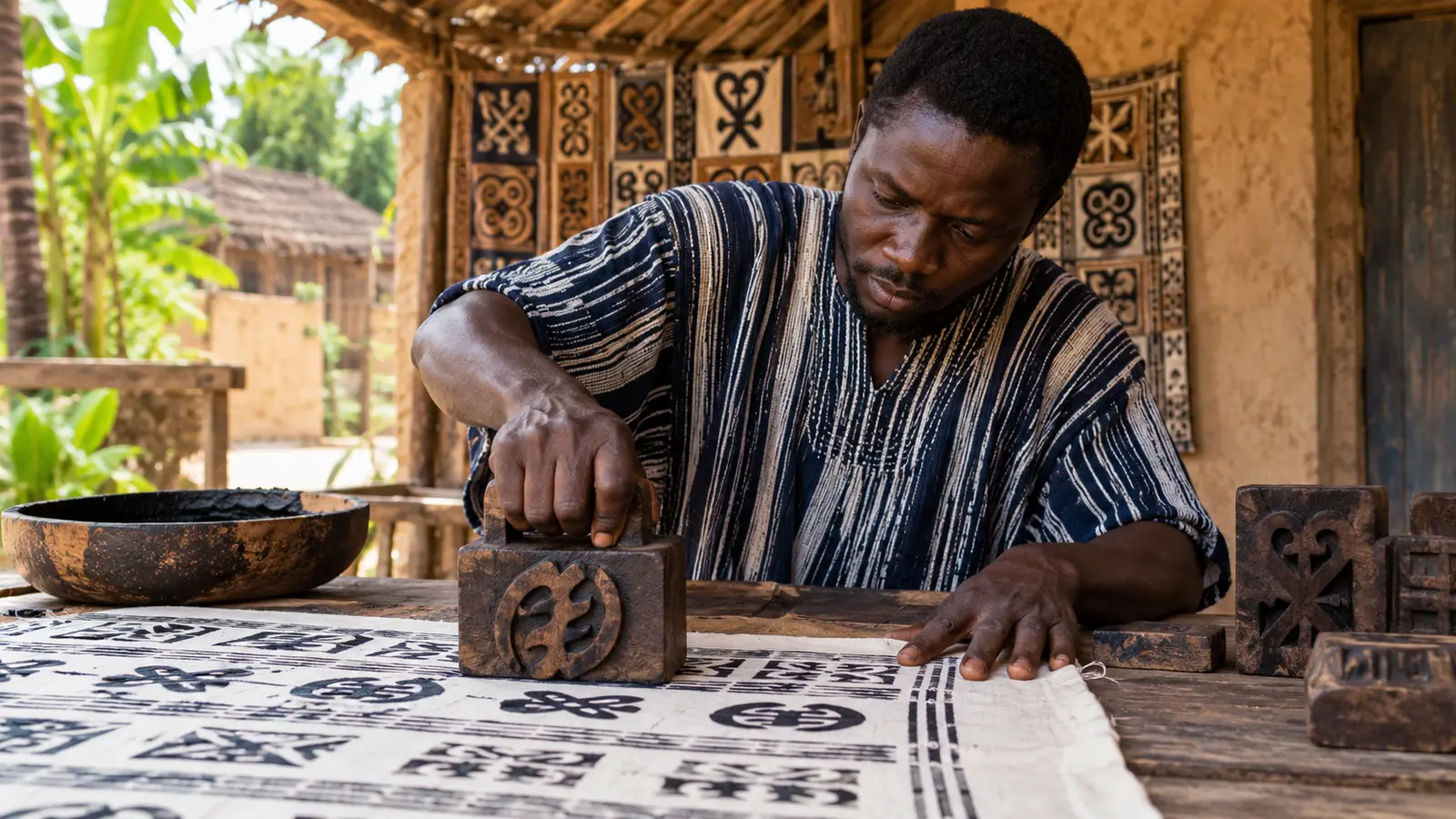
Adinkra is associated principally with Akan communities in Ghana and Côte d’Ivoire. In places such as Ntonso in Ghana’s Ashanti Region, artisans carve symbols into calabash stamps and print them in repeated arrangements on cloth using a dark dye traditionally prepared from tree bark.
The symbols condense proverbs and ideas about God, leadership, endurance, learning and social conduct. A printer must align the grid, reload the stamp and control pressure on a long cloth; the apparent simplicity of a single mark becomes disciplined pattern at scale. Woven and screen-printed forms now sit beside stamped cloth.
Cloth sales support carvers, dye makers, printers, tailors, guides and market traders. Global logos and décor reproduce the symbols widely, often without naming their Akan origin or compensating makers. That visibility creates cultural reach but little automatic economic return.
Digital use is not inherently disrespectful. The standard should be informed use: learn the symbol’s name and context, avoid fabricated meanings, commission Ghanaian artists where possible and treat Ntonso and other production communities as knowledge centres rather than souvenir stops.