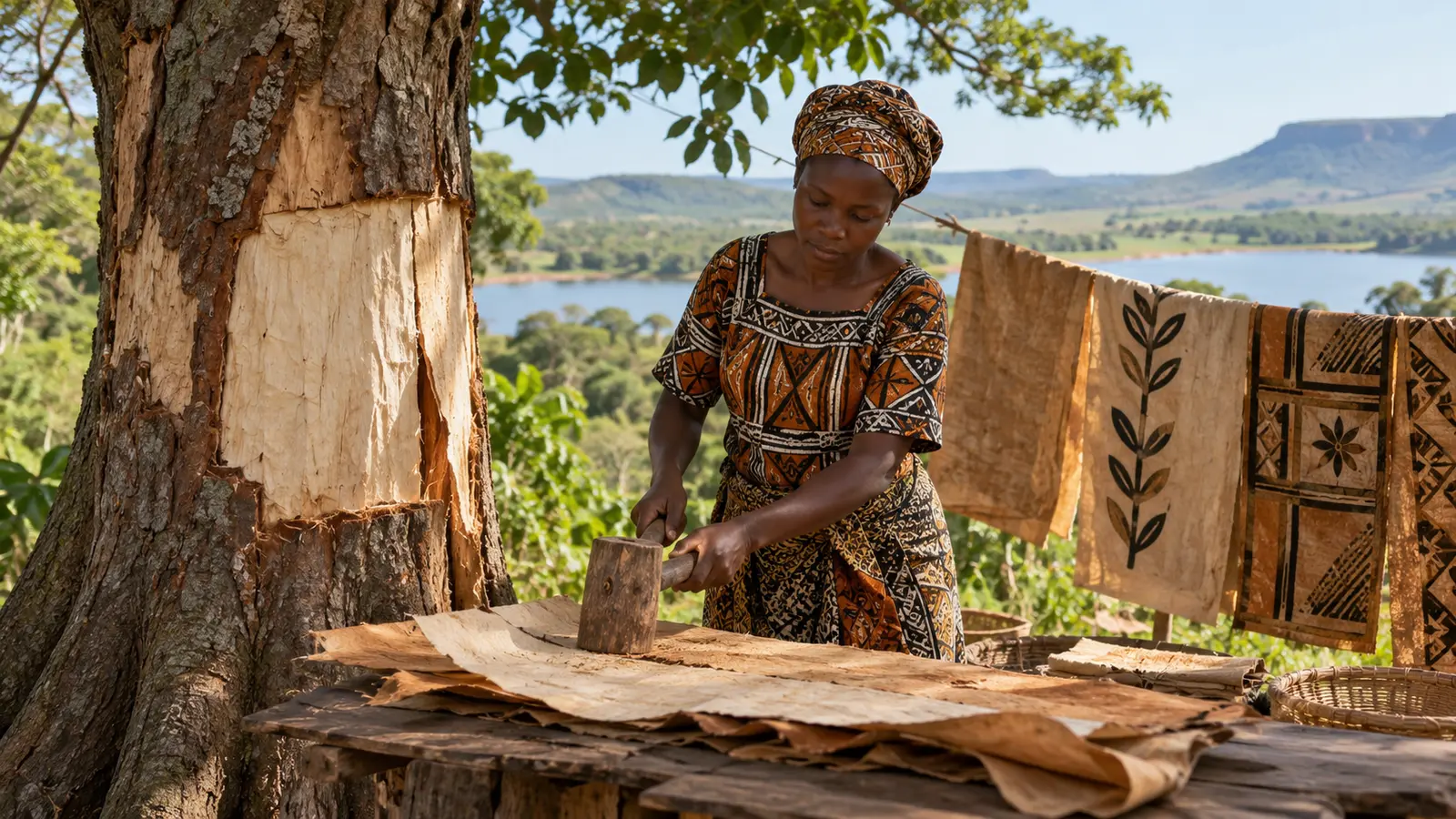
Baganda barkcloth makers harvest the inner bark of the mutuba fig tree in central Uganda without necessarily killing it. An outer layer is removed carefully, the trunk is wrapped to aid regrowth, and the fibrous bark is beaten on a wooden surface until it widens into a soft, terracotta-coloured sheet.
Repeated beating is the technology: different grooved mallets stretch and refine the fibres while the maker judges moisture, thickness and tears. Sections may be joined for larger cloths. Knowledge includes tending trees and choosing harvest time, not only processing bark after it arrives.
Barkcloth has served clothing, bedding, burial and ceremonial uses within Buganda. Today artists, fashion designers and interior makers create new markets involving growers, beaters, dyers, traders and galleries. A high gallery price, however, does not guarantee income at the tree or workshop.
Colonial-era textiles and modern factory cloth reduced everyday use, but they did not make the material obsolete. Renewal depends on planting mutuba, paying masters to teach, documenting provenance and allowing Baganda makers to lead innovation rather than supplying anonymous texture to global design.