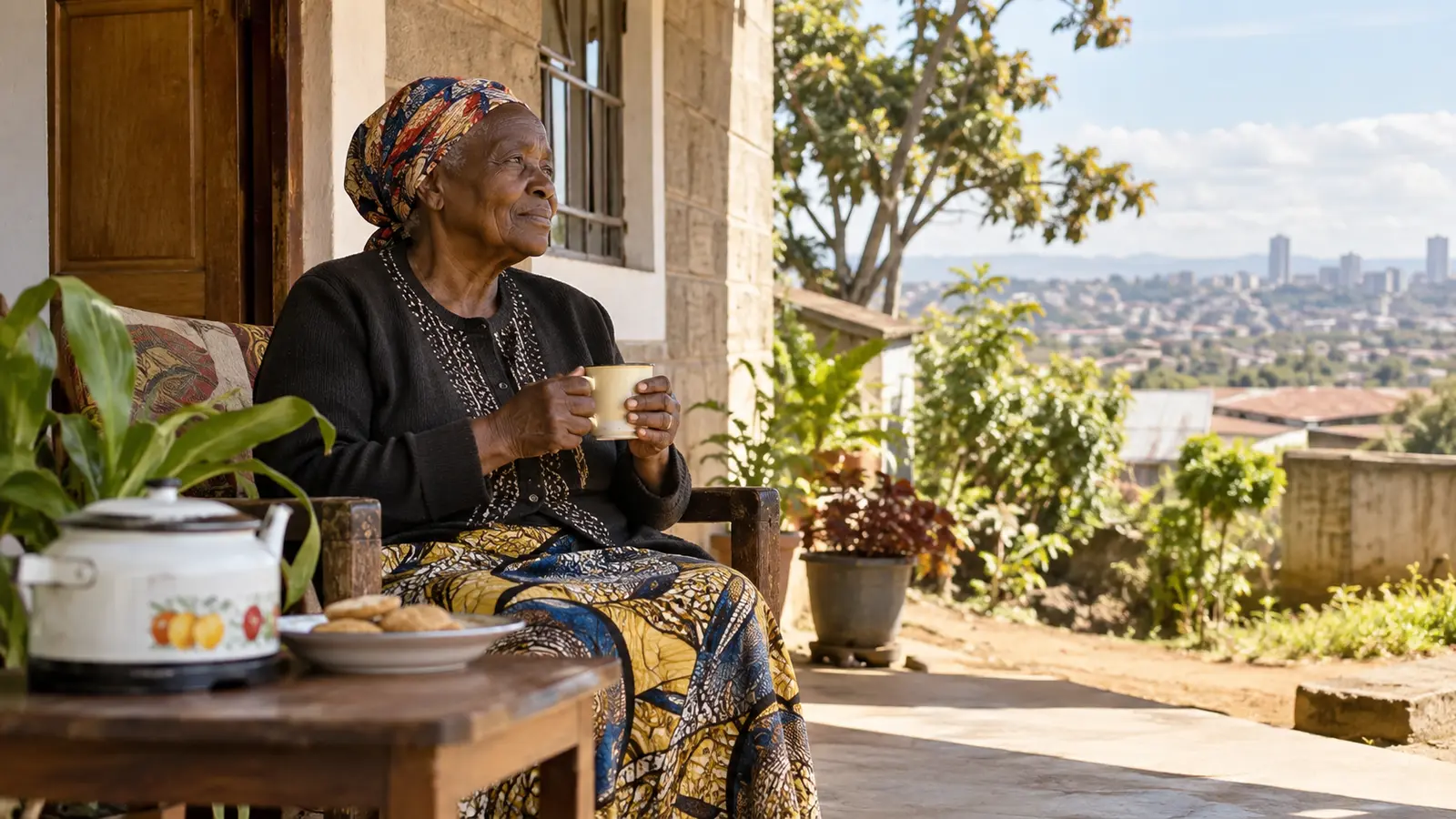
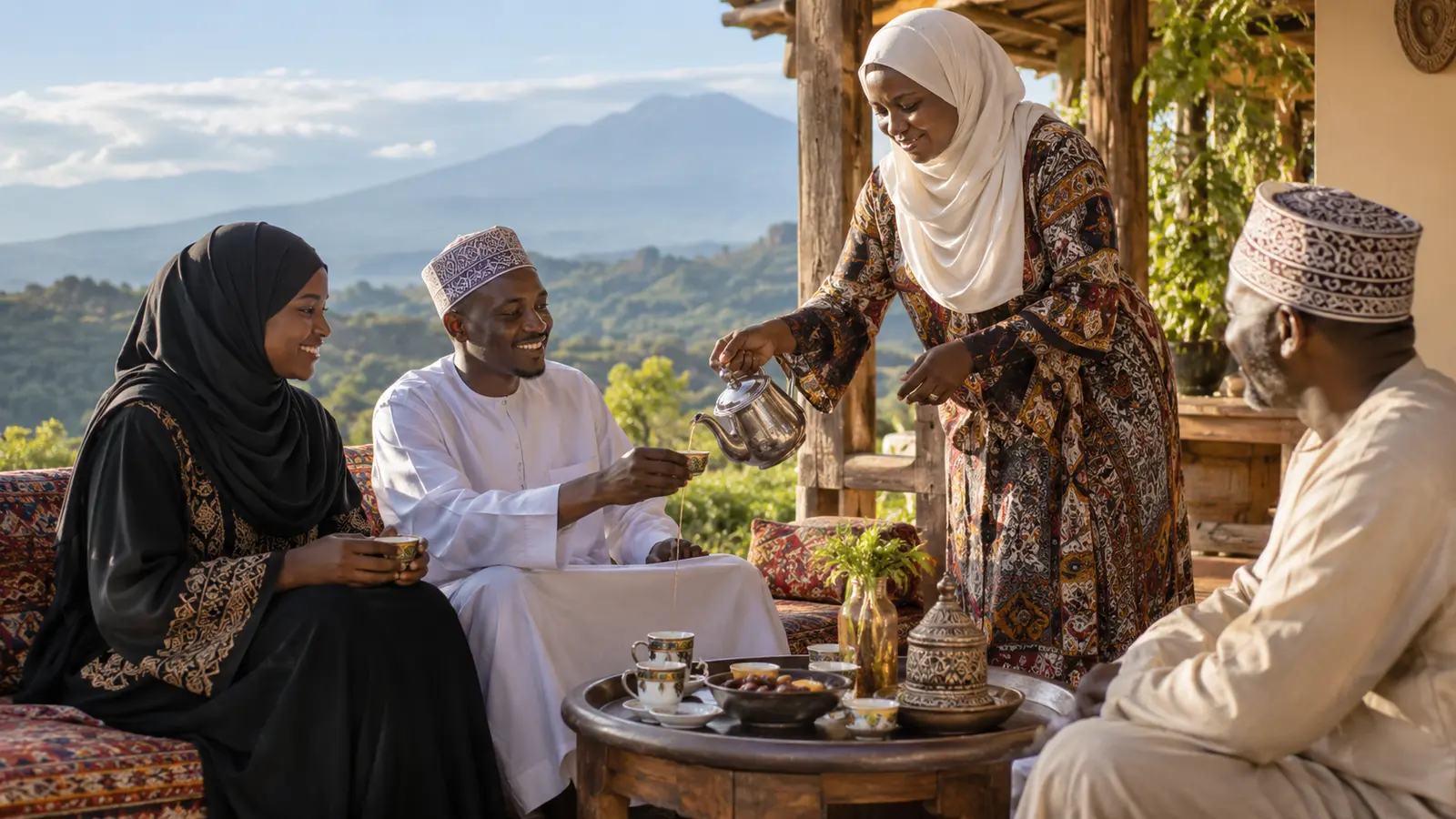
There is no continental tea ritual. Moroccan and Saharan mint tea, Ethiopian and Eritrean black tea, Kenyan chai with milk, and East African spiced variations come from different crops, trade histories and household habits. The host’s method—and who is being welcomed—gives the cup its meaning.
Preparation can involve rinsing green tea, bruising herbs, boiling black tea with milk and spice, or pouring repeatedly to mix and cool. Sugar levels, cup size and the order of service vary. These are learned gestures, not decorative performance for visitors.
Tea connects smallholders and plantation workers in Kenya, Rwanda, Malawi and other producing countries with auction houses, packers, transporters, cafés and exporters. The price of a hotel pot can be many times the value retained where leaves were picked.
Climate change is altering rainfall and suitable growing zones while urban cafés create new premium markets. Hospitality becomes economically honest when buyers know the producing region, workers have safe conditions, and the ritual at the table does not conceal the labour in the field.