
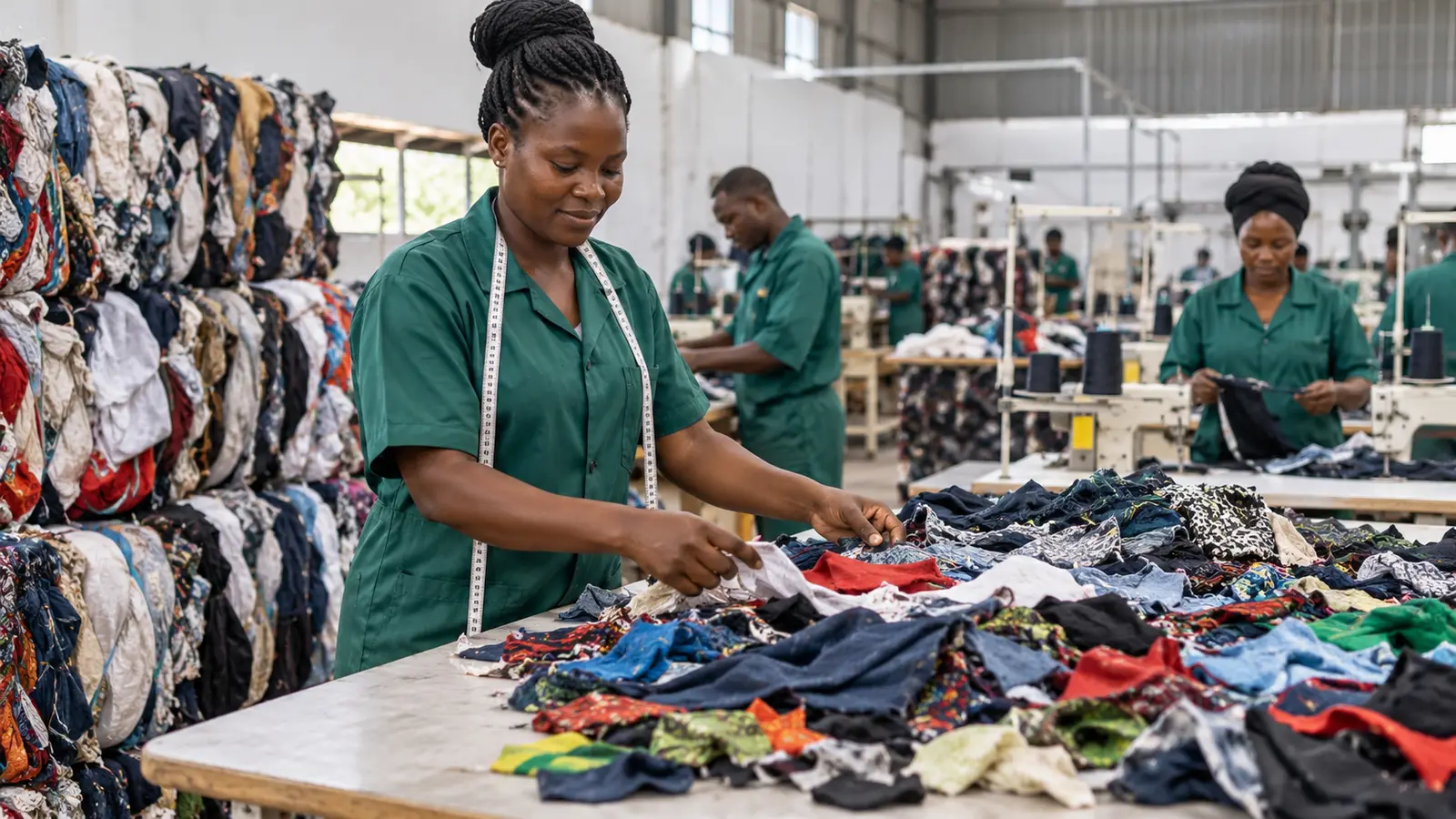
Circular fashion can turn textile waste into African manufacturing opportunity because the commercial decision reaches far beyond a single announcement. Repair, resale and fibre recovery already support informal livelihoods across African cities.
UNEP identifies fashion’s environmental footprint as a global production challenge.
Repair, resale and redesign already keep garments in use across African cities. Circular fashion should build on that expertise rather than import a slogan alongside unwanted clothing.
Sorting, fibre identification, cleaning and recycling require infrastructure. Mixed fabrics and poor-quality fast fashion limit what can be recovered, while textile imports can overwhelm local waste systems.
Investment can support tailors, collectors, resale platforms and manufacturers using recovered fibre. Extended producer responsibility should place costs on brands that create waste.
Investment should strengthen local makers rather than export another waste burden.
Africa’s opportunity is manufacturing that designs for durability and recovers value locally. Circularity becomes another burden if wealthy markets export leftovers while claiming the environmental credit.