Dangote’s refinery expansion story combines several different milestones: raising capital, offering shares, building additional capacity and producing fuel. Treating them as one completed achievement obscures the risks and the public interest. This revised explainer separates the financing story from the output that would have to follow.
Keep the funding rounds distinct
Nairametrics reported in September, using the refinery’s prospectus, that a July private placement raised $2.5 billion. That financing is distinct from the later public offer. A private transaction and a public subscription should not be added together casually or described as interchangeable evidence of what has already been built.
The refinery’s reported expansion ambition is to move towards 1.4 million barrels a day. An ambition is not an independently verified current operating rate. Construction, equipment installation and commissioning take place before sustained production can demonstrate that a new capacity target has been achieved.
What consumers and investors need to know
For fuel users, the important number is not only the refinery’s size. Product availability, distribution costs and the terms on which fuel reaches the final buyer all affect the price paid. A larger facility can be strategically important without making every journey or generator hour immediately cheaper.
Investors have a separate set of questions: how capital will be deployed, the timetable, financing obligations and the risks disclosed in the offer documents. Statements about future dividends or potential returns are not guarantees. Anyone considering a security should read the current regulated documents and seek appropriately qualified advice rather than rely on this editorial analysis.
Photograph correction
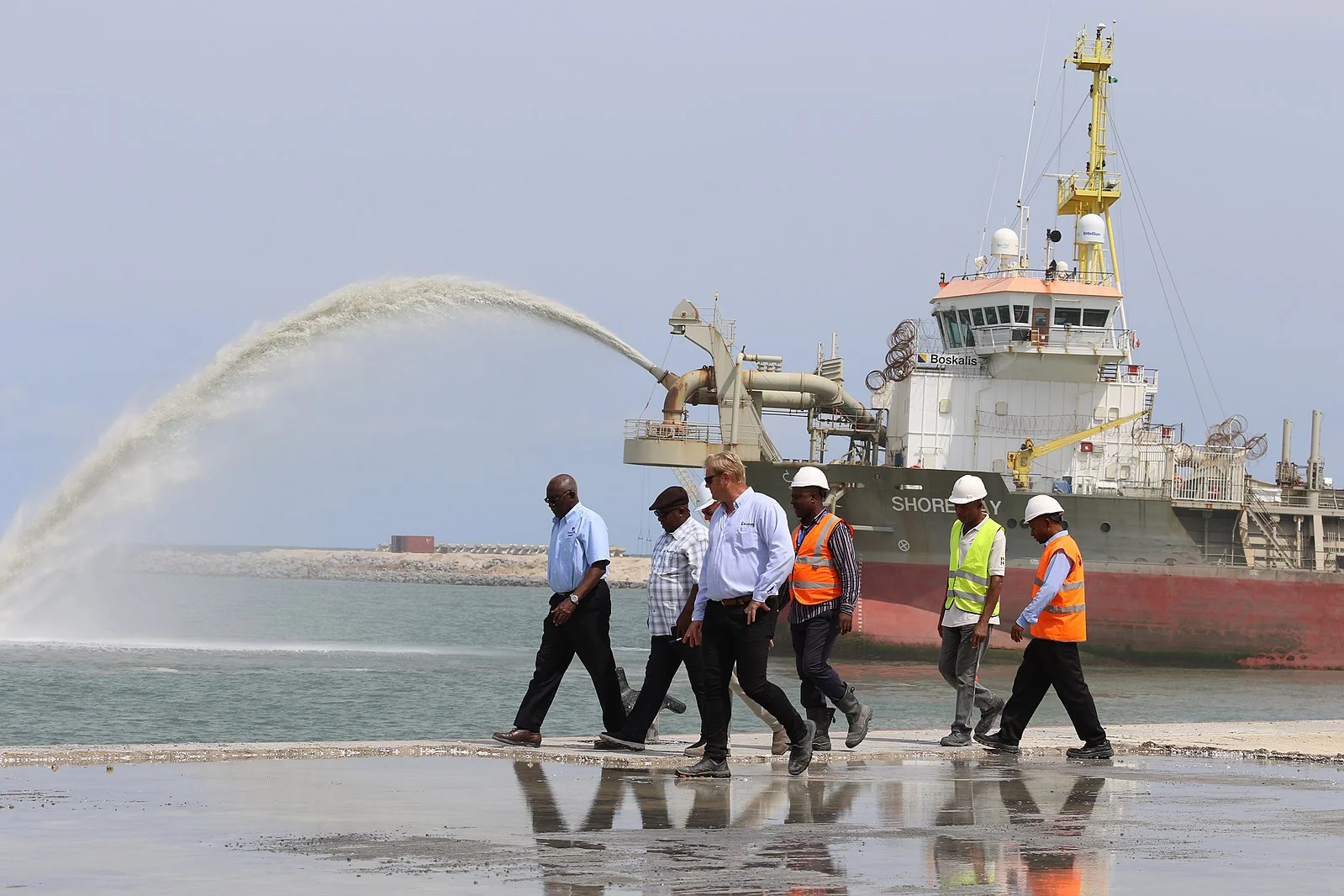
The photograph has also been corrected. It now shows a vessel and visitors at the actual Dangote refinery site in Lagos in March 2020. It is an archival construction-site image, not a photograph of the expansion’s present condition. The earlier beach image was not an appropriate illustration of the refinery and has been replaced.
The next meaningful milestones are demonstrable project progress and reliable operating evidence. Financing can make expansion possible, but it cannot substitute for those results. Readers should expect reporting to keep the promise, the spending and the completed work separate as the project develops.