Côte d’Ivoire’s Council of Ministers has authorised the creation of PETROCI CI-26, a wholly state-owned operating company that will run the producing CI-26 block and its Espoir oilfield. The decree was adopted on Wednesday, 9 September, during a cabinet meeting at the presidential palace in Abidjan.
The decision gives a formal corporate structure to a transfer that had already happened. PETROCI Holding and Canadian Natural Resources signed the asset handover at the Directorate-General of Hydrocarbons in Abidjan on 24 July, and the Ivorian company took over operations from midnight that day. Wednesday’s action should therefore be read as legal and institutional consolidation—not as an announcement that production has only now begun.
According to the official cabinet communiqué, PETROCI CI-26 will be a public limited company with all its capital held by PETROCI Holding. The decree approves the takeover of the relevant petroleum assets and entrusts the subsidiary with operating them on behalf of the state after the previous operators’ exclusive authorisation expired.
The distinction matters because cabinet authorisation, asset transfer and physical operatorship are separate milestones. The government has confirmed the decree and the July transfer, but it has not used Wednesday’s communiqué to announce a new reserve estimate, a production increase or fresh commercial discovery at Espoir.
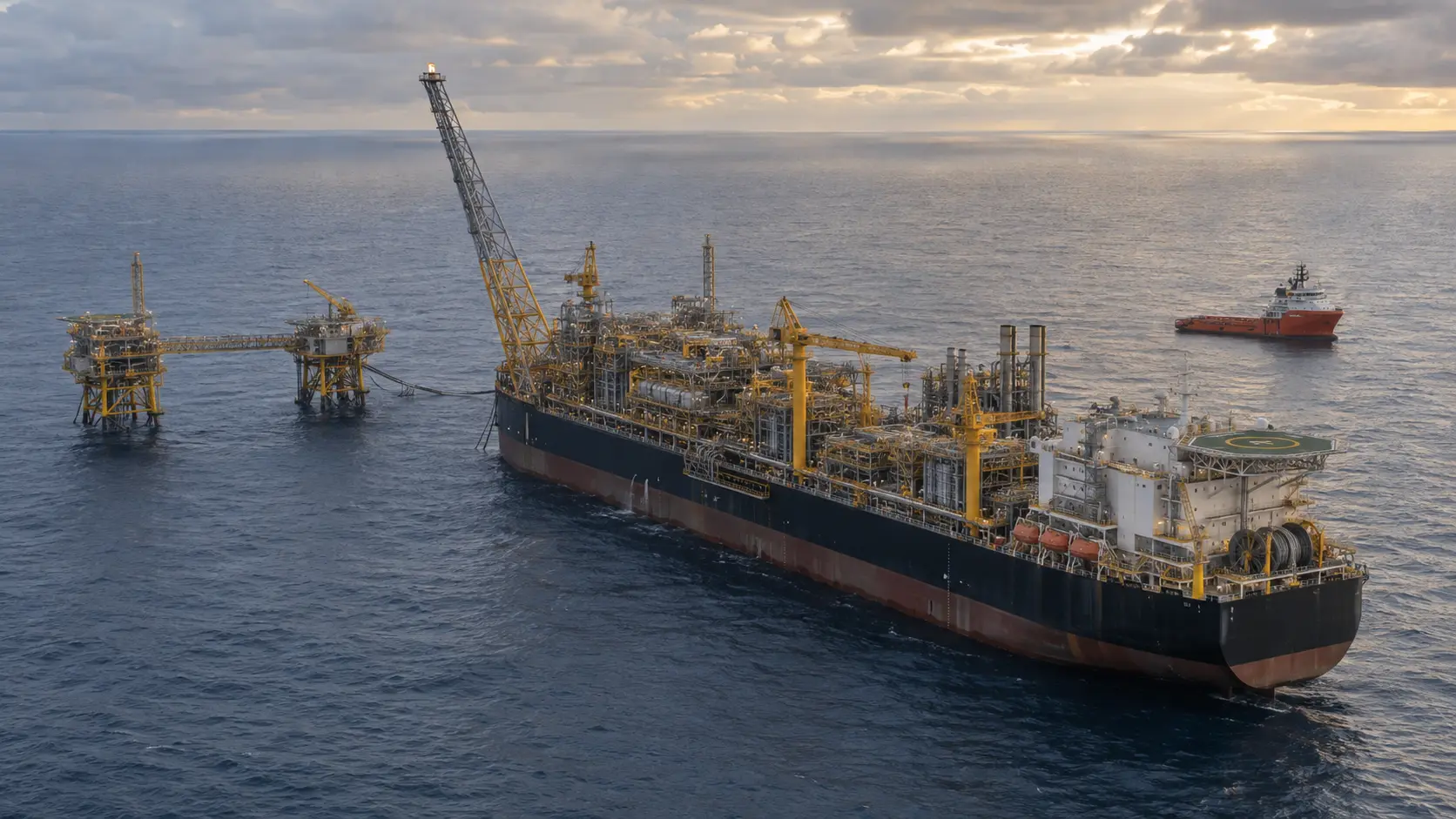
Espoir is one of Côte d’Ivoire’s long-producing offshore assets. PETROCI says the field was discovered in 1980 on block CI-26 off Jacqueville and entered its current production phase in February 2002. Oil and associated gas are handled through offshore infrastructure, with gas carried through a 19-kilometre pipeline to Adjué and connected onward to the domestic network.
That gas link makes continuity more than an upstream industry issue. Côte d’Ivoire uses domestic natural gas in thermal power generation and industry, so reliable maintenance, processing and pipeline operations at mature fields can affect the wider energy system even when their headline oil volumes are smaller than those of newer developments.
PETROCI’s move from minority participation into direct operatorship is also a test of national technical capacity. The company had been preparing for the transition before the handover, including recruiting offshore production, maintenance and marine specialists for a new operating company. Creating a subsidiary does not itself demonstrate operational performance; safety, uptime, investment and transparent reporting will provide the evidence.
Espoir should not be confused with Baleine, the much newer offshore development led by Eni with PETROCI and Vitol. The government took a final investment decision in May on a $4 billion third phase for Baleine. Espoir, by contrast, is a mature asset whose immediate challenge is managing existing infrastructure and remaining resources safely and efficiently.
The policy direction is nevertheless significant. Direct state-company operatorship can retain expertise and a larger share of decision-making inside the country, but it also places commercial and environmental responsibilities more squarely on PETROCI. Public disclosure of production, costs, incidents, contracts and decommissioning liabilities will be central to judging whether greater control produces greater public value.
The next facts to watch are operational rather than ceremonial: whether PETROCI CI-26 maintains uninterrupted output, how it finances field upkeep, what audited results it publishes and how regulators oversee the state-owned operator. For now, the verified development is a cabinet-backed operating vehicle for an asset already transferred in July—not a sudden nationalisation, a new discovery or guaranteed production boom.