
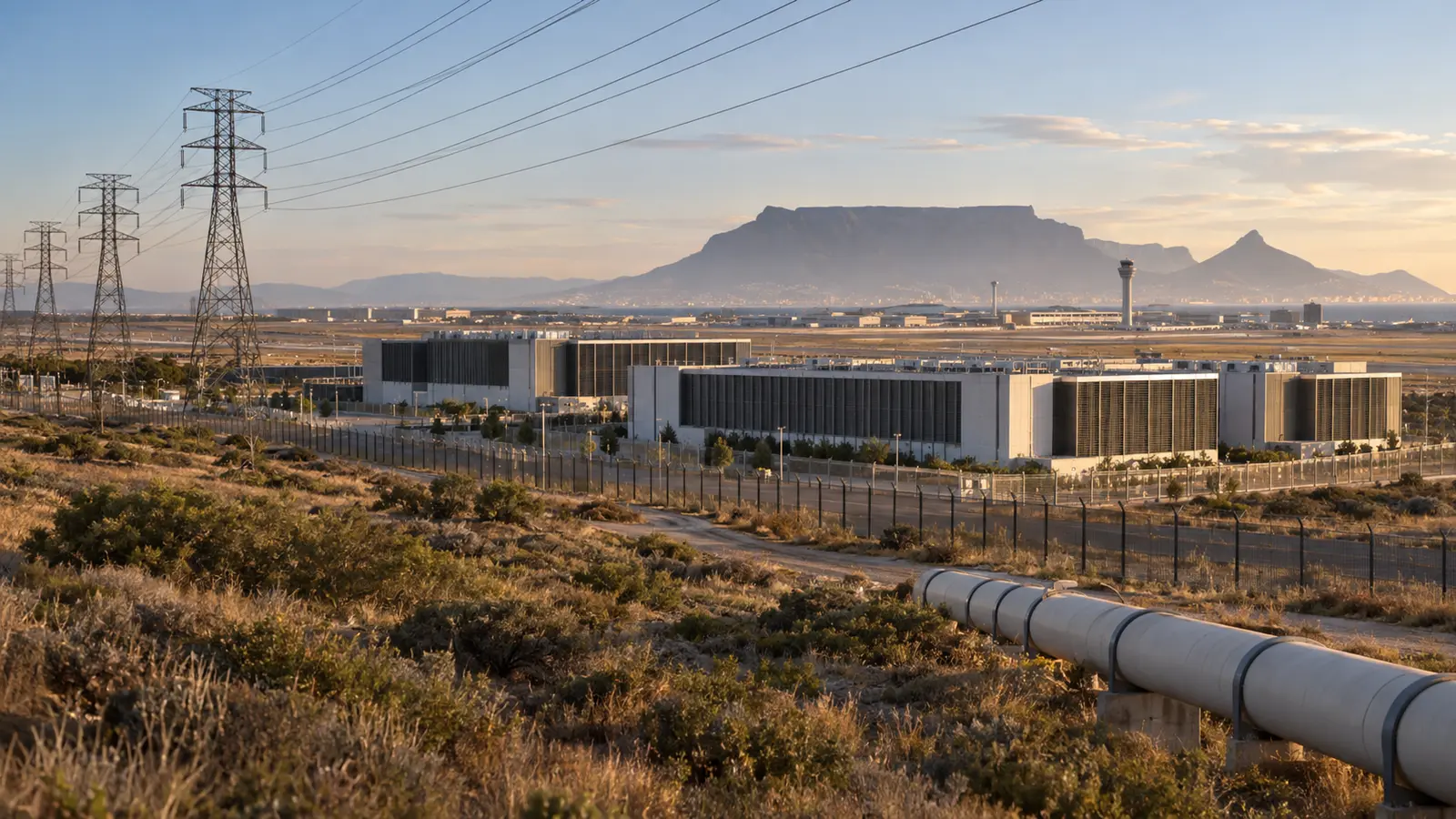
A conditional Cape Town planning approval for two proposed hyperscale data centres near the city's international airport is facing a formal appeal, shifting a months-old infrastructure proposal into a new test of how South Africa weighs digital investment against scarce water, electricity and land. The challenge was reported on Sunday, 13 September 2026.
Housing Assembly, a Western Cape social movement, and technology-justice group Foxglove filed the appeal after the Municipal Planning Tribunal approved land-use changes on 14 July. Their central argument is that the scale and intensity of a data-centre campus were not adequately assessed when the city considered rezoning, subdivision and consolidation of the King Air Industria site.
The distinction between permission and construction is important. The July decision was a planning step, not final authority to begin operating a data centre. The City of Cape Town's public application record identifies amendments intended to accommodate a second data centre at 90 Pallotti Road, while separate site-development, building, utility and any other required approvals remain to be completed.
Equinix has confirmed that it bought land in Cape Town, but said in earlier reporting that it had not submitted a site development plan and would disclose detailed information if it decided to proceed. The company therefore has a prospective site and a route opened by the tribunal decision; it has not announced that construction has started, disclosed an opening date or confirmed an operating campus.
Documents and reporting around the application describe two facilities with a combined floor area of about 122,500 square metres and an estimated electricity requirement of roughly 170 megawatts. Those figures indicate the project's possible scale, but they are not evidence of present consumption because the centres do not yet exist. A final design could also change the actual demand.
The objectors say the application did not provide enough facility-level information about water use, electricity sourcing, backup generation, emissions, noise or cumulative effects. Their estimates of potential water consumption depend on assumptions about cooling technology. They should not be treated as confirmed forecasts of what this particular campus would use without a final engineering design and verified operating plan.
Cape Town's history makes the dispute especially sensitive. Residents endured severe water restrictions during the Day Zero crisis, while South Africa's electricity system has only recently moved away from prolonged load-shedding. At the same time, government sees data centres as strategic infrastructure for cloud services, artificial intelligence, financial systems and lower-latency digital access.
That tension is larger than one company. South Africa already hosts the majority of Africa's data-centre capacity, and new hyperscale projects can attract capital and improve digital resilience. They can also concentrate large utility demands in particular municipalities, which is why transparent, project-specific disclosure matters before communities and regulators accept claimed benefits or costs.
The appeal does not decide the project's fate. It asks the relevant appeal authority to overturn or reconsider the tribunal's conditional decision, and no ruling has been announced. Until that process is resolved and detailed plans are filed, the most accurate description is a proposed campus facing a live planning challenge—not an approved, funded and scheduled construction project.